


The Evolution of the Hong Kong Business Investment Visa: How the Now Defunct Capital Investment Entrant Scheme Inevitably Led to the Startup Visa
Posted by The Visa Geeza / in Investment Visas, Musing / No responses
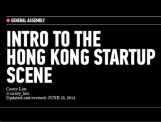
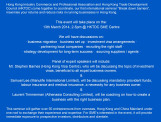
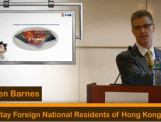
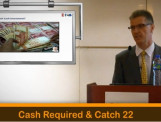
In October 2015, I was invited to give a short presentation at the Canadian Chamber of Commerce Baker Tilly Signature series of talks held at Regus Central Plaza in Wanchai.
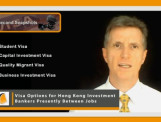
I spoke about the evolution of the ability for foreign nationals to secure immigration status in Hong Kong by investment and how the failing Capital Investment Entrant Scheme in a sense led directly to the so called Startup visa here.
PRACTICE UPDATE: How the content must now be read in light of current ImmD policy:
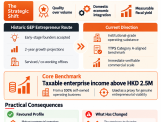
The landscape of Hong Kong business immigration has undergone a complete philosophical and structural inversion. When reflecting on the traditional immigration paradigm articulated across earlier Hong Kong Visa Geeza commentary, foreign nationals seeking to establish commercial footprints in the territory were largely confined to a binary choice between securing conventional employment sponsorship or undertaking the rigorous, high-friction gauntlet of the Investment as Entrepreneur visa. That historical environment was defined by cautious administrative gatekeeping, intensive upfront scrutiny of business viability, and a persistent operational catch-22 for prospective founders. By sharp contrast, the contemporary immigration matrix is dominated by modern, friction-free talent and capital channels, including the Quality Migrant Admission Scheme, the Top Talent Pass Scheme, and the New Capital Investment Entrant Scheme. The emergence and dominance of these mechanisms have radically altered the practical standing and tactical utility of both the standard Entrepreneur visa and its specialized Startup track.
To understand this transformation, one must first examine the historical benchmark of the Investment as Entrepreneur visa. Administered under the General Employment Policy, the entrepreneur route has long rested on the approvability test of demonstrating that an applicant is in a position to make a substantial contribution to the economy of the Special Administrative Region. Historically, this standard proved notoriously demanding for early-stage founders and small-to-medium enterprise owners. The Immigration Department has never operated on mere subjective commercial aspirations. Instead, it expects concrete commitments, including dedicated commercial office leases, clear corporate capitalization, audited financial forecasts, local vendor engagements, and, most critically, the direct creation of verifiable jobs for Hong Kong permanent residents supported by mandatory provident fund contributions.
This strict approach created a well-documented procedural dilemma. An entrepreneur physically present in Hong Kong on a visitor visa was legally barred from taking up employment or joining in any business. Yet, when submitting an entrepreneur application, immigration case officers routinely demanded evidence that the business was already in motion, that leases were signed, capital was committed to local corporate accounts, and staff were on the verge of onboarding. Navigating this tightrope typically required four to six months of protracted case officer correspondence, detailed questionnaires, and commercial risk exposure, with no guarantee that the venture would ultimately be deemed substantial enough to warrant entry clearance.
Recognizing that this traditional regime systematically discouraged modern technology ventures, lean startups, and intellectual property creators who possessed disruptive potential but lacked immediate brick-and-mortar capital, the government introduced the Startup Priority Scheme. Conceived as a streamlined carve-out within the broader entrepreneur framework, the startup track allows founders backed by government-accredited acceleration and incubation programs—such as Hong Kong Science and Technology Parks Corporation incubation programs, Cyberport, and the Design Incubation Programme—to bypass the conventional turnover, direct capital deployment, and immediate job creation thresholds. Under this program, government vetting bodies effectively act as immigration proxies; acceptance into a qualifying public incubation cohort creates a strong administrative presumption of approvability, giving early-stage innovators a viable pathway that traditional retail and trading startups could never access.
However, the subsequent rollout and expansion of modern non-sponsored visa schemes have profoundly eclipsed both the standard entrepreneur route and the startup track, fundamentally changing the strategic calculus for business founders entering Hong Kong.
The Top Talent Pass Scheme represents the most disruptive development in this regulatory shift. Introduced to counter demographic contractions and capture globally mobile talent, the TTPS dismantled the foundational requirement of prior employment sponsorship or upfront business establishment. By granting an initial two-year unconditional permission to land to individuals earning at least two and a half million Hong Kong dollars annually, or to graduates of designated world top one hundred universities, the scheme created an immediate, frictionless bypass around the traditional entrepreneur visa. For founders qualifying under Category A or Category B, applying for an entrepreneur visa has become practically redundant. A founder holding a TTPS visa can arrive in Hong Kong, incorporate a limited company, negotiate commercial leases, hire local staff, and generate commercial traction for two full years entirely free of the traditional catch-22 and without needing immigration clearance for their initial business activities.
The regulatory pressure point under the TTPS has shifted entirely from upfront entry gatekeeping to downstream renewal scrutiny. When a TTPS visa holder approaches their first extension of stay at the end of their initial two-year grant, they must demonstrate active commercial contribution. At this renewal juncture, if the individual has chosen the entrepreneurial route, the Immigration Department assesses their venture against criteria closely mirroring the entrepreneur approvability test, auditing genuine business turnover, physical business premises, profits tax filings, and local staff hiring. The critical distinction, however, is chronological. While the traditional entrepreneur applicant must bear severe commercial risk and lengthy application delays before knowing if they can lawfully reside and work in Hong Kong, the TTPS entrepreneur is afforded two full years of lawful, on-the-ground operational runway before facing substantive regulatory scrutiny.
Running parallel to this dynamic is the evolution of the Quality Migrant Admission Scheme. Historically characterized in immigration commentary as an unpredictable, points-based mechanism hampered by strict annual quotas of one to two thousand slots and protracted quarterly allocation committee deliberations, the QMAS has been systematically modernized. The temporary lifting of annual quotas and the implementation of automated scoring processes transformed the scheme into a high-capacity admission pipeline. Crucially, successful QMAS entrants receive an initial grant of stay that is completely untied to an employer or a specific commercial entity. Like the TTPS, QMAS effectively functions as an open work permit and a flexible entrepreneur authorization. A points-tested migrant can enter Hong Kong and launch a startup, acquire an existing enterprise, or provide independent consulting services without ever seeking prior departmental approval for their commercial participation. At the extension phase, the applicant need only show that they have settled in Hong Kong and made continuous socio-economic contributions, whether through gainful employment, corporate directorship, or enterprise development.
At the opposite end of the capitalization spectrum sits the New Capital Investment Entrant Scheme. The original CIES, which was frozen in early 2015 to pivot away from passive capital and residential real estate allocations, left a long-standing void for passive high-net-worth investors. Its modern re-establishment under the New CIES framework reintroduced an investment immigration channel anchored to a qualifying net-asset threshold of thirty million Hong Kong dollars. The structural distinction between the New CIES and the entrepreneur visa remains stark. An entrepreneur visa applicant places risk capital directly into operational corporate enterprise, assuming active commercial management, operational liabilities, and direct hiring obligations. The New CIES entrant, by contrast, deploys passive financial capital into permissible ring-fenced assets, including approved equities, debt securities, certificates of deposit, non-residential real estate, and mandatory government-directed innovation portfolios, with zero obligation to manage a company, employ local staff, or negotiate commercial leases. For high-net-worth business owners and family office principals, the New CIES provides an absolute decoupling of residency from daily corporate operations, entirely avoiding the forensic employment and operational audits that characterize entrepreneur extensions.
This realignment of immigration mechanisms has fundamentally altered the role of the traditional Investment as Entrepreneur visa. Today, the standard entrepreneur route serves primarily as a specialized pathway of last resort. It remains essential for foreign nationals who lack degrees from top-tier global universities, who do not meet the high-income threshold of the TTPS, who fall short of the competitive thresholds of the QMAS points system, and who lack the substantial liquid wealth demanded by the New CIES. For these mid-market entrepreneurs, traditional traders, and service providers, the conventional entrepreneur visa remains the sole viable immigration bridge into Hong Kong.
Consequently, the operational standard applied to traditional entrepreneur applications has grown even more demanding. Because alternative channels absorb the majority of high-caliber graduates and passive capital, the Immigration Department applies intense forensic diligence to standard entrepreneur filings. Case officers routinely look past paper business plans and theoretical forecasts to demand verifiable financial substance. Today, demonstrating genuine commitment requires the immediate, upfront deployment of significant unencumbered personal liquidity into a local corporate banking structure, the execution of non-residential commercial tenancy agreements, and the onboarding of two to three local permanent residents onto active payroll with registered mandatory provident fund accounts. One-person consulting operations and home-based service firms consistently fail the departmental substantiality test, as authorities demand tangible proof that the enterprise will expand the broader economic fabric and generate domestic employment.
The Startup Priority Scheme retains a critical, highly defined role within this ecosystem, operating as an incubator-backed sanctuary from these stringent capital rules. When an early-stage founder lacks the personal fortune for the New CIES, does not qualify for the TTPS, and lacks the capital to hire multiple local staff upfront, acceptance into a recognized Hong Kong incubator remains an invaluable lifeline. Because the Immigration Department explicitly defers to the rigorous technical, commercial, and financial vetting conducted by panels at Cyberport or the Science and Technology Parks, startup track applicants avoid the aggressive capital and revenue challenges leveled against independent entrepreneurs. However, this relief is strictly conditioned upon maintaining active, compliant standing within the accredited incubation cohort; graduating from or leaving the program forces the enterprise back into standard commercial assessments at subsequent visa renewals.
In summary, the evolution of Hong Kong business immigration practice since the earlier eras of restrictive gatekeeping represents a comprehensive modernization of economic entry channels. Where prospective business owners once faced an agonizing catch-22 through a solitary, arduous entrepreneur application, the modern regulatory framework offers multiple entry options. The Top Talent Pass Scheme and the Quality Migrant Admission Scheme have effectively democratized entrepreneurship for qualified individuals by granting immediate, non-sponsored landing permissions that allow founders to establish operations organically on the ground before facing compliance reviews at extension. The New Capital Investment Entrant Scheme has successfully isolated and streamlined pure capital entry, freeing passive investors from the burdens of commercial management. Meanwhile, the traditional Investment as Entrepreneur visa and its startup track remain strictly defined anchors at the foundation of the system: the startup scheme functioning as a targeted incubator fast-track for technological innovators, and the conventional entrepreneur visa standing as a rigorous, forensic pathway requiring undeniable proof of commercial substance, local job creation, and tangible economic contribution.
More Stuff You May Find Useful or Interesting
Business Review – the sword of damocles for successful Hong Kong investment visa applicants
The anatomy of a ‘slam dunk’ Hong Kong investment visa approval taking just 7 weeks to approval
Do you have a business plan template I can use in my Hong Kong investment visa application?
How to ensure you’re not breaking the law by operating a business in Hong Kong as a Visitor
Are there any advantages to being an existing Hong Kong resident when you make an application for a Hong Kong investment visa?
Please select the social network you want to share this page with:


The Hong Kong Visa Geeza (a.k.a Stephen Barnes) is a co-founder of the Hong Kong Visa Centre and author of the Hong Kong Visa Handbook. A law graduate of the London School of Economics, Stephen has been practicing Hong Kong immigration since 1993 and is widely acknowledged as the leading authority on business immigration matters here for the last 24 years.