


6 – How to Apply For a Hong Kong Investment Visa Without Any Professional Help – Who Doesn’t Have a Visa Problem?
Posted by The Visa Geeza / in Investment Visas, Musing / 23 responses
PRACTICE UPDATE: How the content must now be read in light of current ImmD policy:
Historical Context: Carving Out Immigration Exemption and Status Tiers
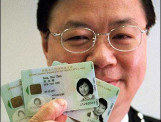
Historically, as examined in 6 – How to Apply For a Hong Kong Investment Visa Without Any Professional Help – Who Doesn’t Have a Visa Problem?, this installment of the Centre O presentation series identified the categories of foreign nationals and residents who were exempt from having to navigate the rigorous Investment as Entrepreneur approvability test altogether. In that era, the Geeza categorized individuals into clear jurisdictional groups: those holding the Right of Abode (Hong Kong permanent residents), those with the Right to Land or unconditional stay, dependent visa holders sponsored by qualified spouses, and individuals residing under open work schemes like the Capital Investment Entrant Scheme (CIES) or Working Holiday arrangements. These groups possessed unencumbered rights to establish or join in a business without prior ImmD consent. For everyone else needing an independent entrepreneur visa under the General Employment Policy (GEP), the process was manageable through discretionary adjudication. A prospective founder lacking exempt status could still readily overcome their “visa problem” by deploying modest seed capital of a few hundred thousand Hong Kong dollars, renting a desk in a serviced office or co-working space, and submitting a business plan committing to hire local staff over a gradual two- to three-year ramp-up period.
Modern Reality: The Widening Gulf Between Unrestricted Status and the Binary Hardware Audit
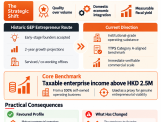
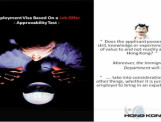
As detailed in A Major Strategic Shift: The Upgraded Assessment Regime for Hong Kong’s Investment as Entrepreneur Visa, the divide between individuals with unrestricted commercial rights and those who must apply independently has become an impassable operational chasm. While permanent residents, Right to Land holders, and genuine dependent visa holders continue to enjoy total entrepreneurial freedom without immigration oversight, founders who do have a “visa problem” now face an unyielding, binary compliance audit aligned with Top Talent Pass Scheme (TTPS) Category A operational substance, benchmarked at an enterprise scale of approximately HKD 2.5 million. ImmD has completely excised qualitative leniency for un-incubated applicants. Case officers no longer accept forward-looking promises of economic contribution or low-overhead service models. Instead, solving an entrepreneur visa problem requires verifiable corporate hardware deployed on day one: HKD 1.5 million to HKD 2.0 million in dedicated corporate liquidity held in a local Hong Kong business bank account; an executed commercial tenancy agreement for exclusive physical premises (four walls), strictly disqualifying serviced offices, virtual addresses, shared desks, and co-working spaces; and active Mandatory Provident Fund (MPF) payroll contributions for two to three full-time local Hong Kong permanent resident employees working on-site from inception.
Strategic Baseline: Structural Immunity vs. The Incubator Monopoly
Consequently, treating an entrepreneur visa requirement as a minor procedural hurdle that can be solved with traditional lean-startup methods is an administrative death sentence for modern founders. A non-exempt foreign national who incorporates a venture, rents a co-working bench, and files an independent application backed by modest savings will face swift and summary refusal. This instant denial extinguishes lawful visitor stay, forces an immediate exit from the territory, and permanently terminates the applicant’s continuous ordinary residence chain required to secure Right of Abode under the seven-year rule. The modern business entry framework enforces an absolute institutional monopoly: formal, documented admission into an officially accredited government incubation program, such as Cyberport, the Hong Kong Science and Technology Parks Corporation (HKSTP), or the Design Incubation Programme, serves as the sole surviving statutory mechanism recognized by ImmD to waive the mandatory upfront liquidity, dedicated commercial lease, and immediate MPF headcount thresholds. Outside this accredited institutional safe harbor, foreign founders without pre-existing unencumbered immigration status must deliver enterprise-scale financial and physical capitalization on day one, or accept that Hong Kong’s independent entrepreneur pathway is entirely closed to them.
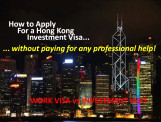
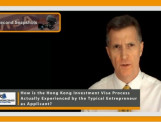
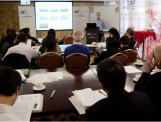
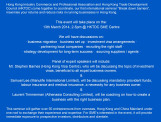
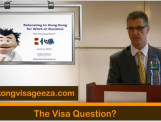
On January 17, 2013 I gave a talk at Centre O in Wanchai on how to go about applying for a Hong Kong business investment visa without the need to pay for any professional help.
The 30 minute talk was broken down into 24 very easy to digest segments and each of these segments is presented here.
The talk is designed to allow the D-I-Y visa applicant to use the 100% free resources of both the Hong Kong Visa Handbook as well as the Hong Kong Visa Geeza Blog.
Please see:
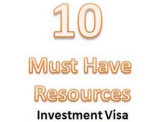
10 Must Have Resources for Any Hong Kong Investment Visa Application
and
The videos will be added incrementally over the course of the next 2-3 weeks until the entire talk has been presented.
In the meantime, why not sign up for our D-I-Y Visa Kit here?
The Complete Series
1 – Introduction
6 – Who Doesn’t Have a Visa Problem?
7 – The Pathway for Mainlanders
8 – What Can You Do as a Visitor?
10 – Investment Visa Approvability Test
11 – Three Pillars of Approval
12 – How Much Cash Investment?
13 – The Catch 22
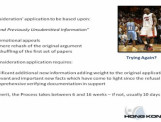
16 – Trying Again?
18 – 10 Must Use Resources (Infographic)
19 – 10 Must Use Resources (Visa Factsheet)
20 – 10 Must Use Resources (Application Plan)
21 – 10 Must Use Resources (Case Studies)
22 – 10 Must Use Resources (Templates)
Please select the social network you want to share this page with:


The Hong Kong Visa Geeza (a.k.a Stephen Barnes) is a co-founder of the Hong Kong Visa Centre and author of the Hong Kong Visa Handbook. A law graduate of the London School of Economics, Stephen has been practicing Hong Kong immigration since 1993 and is widely acknowledged as the leading authority on business immigration matters here for the last 24 years.