


New Company Law in Hong Kong Impacts Entrepreneurs, Startups and Business Investment Visa Applicants
Posted by The Visa Geeza / in Investment Visas, Musing /
PRACTICE UPDATE: How the content must now be read in light of current ImmD policy:
Historically, this analysis examined the enactment of Hong Kong’s new Companies Ordinance (Cap. 622)—which overhauled corporate administration by abolishing par value for shares, streamlining company formations, introducing statutory declarations of solvency, and requiring at least one natural person director—and framed its operational impact on foreign entrepreneurs and Investment as Entrepreneur visa applicants. The Geeza treated this statutory modernizing as a welcoming, friction-reducing development for founders. In that era, the immigration implications were largely administrative: establishing a corporate vehicle became faster and cheaper, and ImmD integrated the updated statutory filings (such as the Incorporation Form NNC1 and Annual Return NAR1) into its holistic case reviews. The underlying immigration doctrine remained thoroughly accommodating and discretionary: having seamlessly set up their Cap. 622 private company, an entrepreneur could comfortably satisfy the statutory “substantial contribution” test with modest seed capital of a few hundred thousand dollars, a flexible desk in a serviced office or co-working space, and a phased commercial plan to roll out local hires over a two- to three-year ramp-up period.
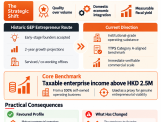
The game has changed from an era where seamless corporate incorporation served as a viable springboard for immigration into a regime where corporate structure means nothing without massive, audited operational substance. Under post-April 2026 administrative practice aligned with TTPS Category A operational substance (~HKD 2.5M enterprise scale), ImmD views an incorporation under Cap. 622 as nothing more than a legal prerequisite with zero evidentiary weight toward an entrepreneur visa. Case officers have purged administrative leniency and narrative business plans: setting up a low-cost private company and presenting statutory registers no longer moves the needle. For un-incubated applicants, the statutory vehicle must be paired on day one with an unforgiving compliance audit of non-negotiable corporate hardware: HKD 1.5M–2.0M in deployed corporate bank liquidity sitting in a local bank account, an executed commercial lease for exclusive physical premises (“four walls”) that strictly disqualifies serviced offices, shared spaces, and co-working desks entirely, and active Mandatory Provident Fund (MPF) payroll contributions for 2–3 local Hong Kong permanent residents.
Consequently, the ease of incorporating an enterprise under modern company law has created an even sharper trap for foreign founders. Incorporating a company remains fast and frictionless, but attempting to use that corporate shell to sponsor an independent entrepreneur visa without enterprise-grade hardware guarantees swift and summary refusal. The sole statutory mechanism that waives these crushing day-one hardware mandates—liquidity deployment, dedicated commercial leases, and immediate MPF headcount—is formal, documented admission into an officially accredited government incubator (such as Cyberport, HKSTP, or the Design Incubation Programme). Outside this accredited institutional safe harbor, a perfectly formed Cap. 622 company is an empty shell in the eyes of the Immigration Department.
Hong Kong company law will never be the same again…

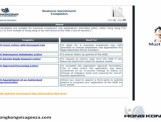
I am grateful to Belinda Wong of Leader Corporate Services for sending through her Note on the new Hong Kong Companies Ordinance which came into effect earlier this month.
If you’re a shareholder or director of a limited liability company incorporated in Hong Kong, you should read it to understand how it affects you in your role as a stakeholder in your enterprise.
As the author of the definitive Hong Kong Company Secretary’s Practice Manual, Belinda is widely acknowledged as the leading authority in this space.
Belinda regularly shares her insight into the law of company administration and a complete list of her recent works can be found here.
More Stuff You May Find Useful or Interesting
Why do Hong Kong investment visas get denied?
The Hong Kong Immigration Department are out to deny – not approve – visa applications (aren’t they?)
Are there any advantages in being an existing resident of Hong Kong when you make an application for an investment visa?
10 Must Have resources for any Hong Kong investment visa application
Hong Kong investment visa – the 3 legs of the application approvability stool
Please select the social network you want to share this page with:


The Hong Kong Visa Geeza (a.k.a Stephen Barnes) is a co-founder of the Hong Kong Visa Centre and author of the Hong Kong Visa Handbook. A law graduate of the London School of Economics, Stephen has been practicing Hong Kong immigration since 1993 and is widely acknowledged as the leading authority on business immigration matters here for the last 24 years.