


Hong Kong Visas From 39,000 Feet @ General Assembly – Questions & Answers
Posted by The Visa Geeza / in Employment Visas, Family Visas, Investment Visas, Long Stay & PR, Musing, Refusals & Appeals, Visitor Visas / 2 responses
PRACTICE UPDATE OCTOBER 2026
When reviewing the principles laid out in the 2012 General Assembly session, Hong Kong Visas From 39,000 Feet, the core immigration framework has experienced a fundamental realignment. In that era, the advice delivered to startup founders, creative professionals, and aspiring expatriates was anchored around strict structural boundaries: the rigid binary of employer sponsorship versus the commercial catch-22 of an investment visa, the severe limitations of visitor status, the unpredictability of discretionary assessments, and the slow, paper-driven bureaucracy of the Immigration Tower in Wan Chai. Updating those questions and answers against contemporary practice demonstrates how much the regulatory center of gravity has shifted from upfront administrative friction to downstream compliance auditing.
In 2012, the primary question from attendees was how an individual could legally land, incorporate, and operate a lean business without immediate, substantial capital. The advice then was sobering: there was no middle ground between a sponsored General Employment Policy work visa and a full Investment as Entrepreneur application. Founders faced the infamous catch-22, where launching a business on visitor status violated immigration law, yet applying for an entrepreneur visa required already committing significant personal risk capital, securing commercial office leases, and proving immediate local job creation for permanent residents.
Today, that entire landscape has been rewritten for a wide cohort of founders. The rollout of non-employer-sponsored mechanisms has introduced unprecedented flexibility. An entrepreneur holding a degree from an eligible global top one hundred university, or earning at least two and a half million Hong Kong dollars annually, no longer needs to run the gauntlet of the traditional entrepreneur test. Under the Top Talent Pass Scheme, they can secure an immediate, open two-year landing permission with zero upfront business vetting. They can lawfully enter, register their enterprise, lease property, test commercial viability, and build traction completely unburdened by immigration gatekeeping. Similarly, the points-tested Quality Migrant Admission Scheme, freed from its legacy annual quotas and slow quarterly allocation committee cycles, functions as a de facto open work and business permit. Even for founders without elite degrees or high incomes, the introduction of the Startup Priority Scheme resolved the original startup dilemma by recognizing government-backed incubation programs like Cyberport and the Hong Kong Science and Technology Parks Corporation as an automatic proxy for commercial approvability, allowing early-stage ventures to bypass historical turnover and immediate staffing tests.
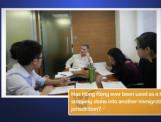
Another recurring theme from the 2012 seminar addressed the practical reality of being caught between roles, moonlighting, or transitioning from an employee into an independent consultant or founder. The standard practice advice at the time stressed that an employment visa was strictly tethered to a single corporate sponsor. Engaging in freelance projects, taking equity compensation in a secondary venture, or self-sponsoring through a newly incorporated shell company was treated by the Immigration Department as illegal employment or contrived sponsorship, carrying severe enforcement risks. While the legal prohibition against unauthorized side employment remains absolute for standard GEP holders, the tactical roadmap for individuals in Hong Kong has transformed. The modern options allowing open work authorization mean professionals routinely transition into independent consulting, directorships, or multi-client freelancing without needing departmental permission to take up individual client engagements. For traditional employment visa holders wishing to operate a secondary business, the department has formalized clearer administrative guidelines for side-business permissions, assessing whether the secondary activity causes commercial conflict with the primary sponsoring employer.
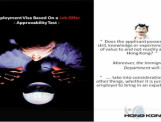
The administrative burden of proving local recruitment failure has also undergone major structural reform. In 2012, sponsoring an employment visa for an expatriate employee, especially in a young or non-profitable company, required extensive local advertising evidence, job market surveys, and detailed explanations proving that no local Hong Kong resident could fill the post. Today, through the creation and continuous expansion of the official Talent List, employers hiring in designated priority fields such as fintech, data engineering, healthcare, and ESG are automatically exempt from the local recruitment market test, drastically reducing procedural pushback and expediting entry approvals.
The questions regarding the mechanics of visa filing, processing times, and passport labels reflect perhaps the most visible practical evolution. In 2012, every transaction required physical trips to the Wan Chai Immigration Tower, manual document lodgments on designated department floors, lengthy paper questionnaires, and the physical pasting of visa endorsement labels into passports. That entire operational paradigm has been dismantled. The Immigration Department operates an end-to-end digital ecosystem: filings are submitted via electronic portals, correspondence is managed digitally, and approvals are issued as downloadable electronic visas with encrypted verification codes, eliminating the physical passport label entirely. Furthermore, the operational hub has relocated from Wan Chai to a modernized, purpose-built headquarters facility in Tseung Kwan O.
Finally, the nature of immigration risk and scrutiny has flipped entirely. In 2012, the hardest hurdle was passing through the front gate, as getting an initial entry visa approved was the main friction point, while renewals were generally considered predictable administrative formalities as long as the sponsor was still operating. Under current practice, the front door has been opened wide to facilitate massive talent inflows, but the true regulatory bottleneck has been relocated to downstream extensions and permanent residency reviews. When talent entrants and business operators apply for their first two-year extension of stay, the Immigration Department executes forensic compliance audits, cross-referencing Inland Revenue corporate profits tax assessments, salaries tax payments, and Mandatory Provident Fund contribution histories for local employees. The key takeaway from the 2012 presentation remains true in spirit: Hong Kong Immigration evaluates economic substance over artificial form. However, where that substance once had to be heavily documented and argued before arrival, today it is audited forensically after arrival, granting founders operational runway but demanding demonstrable, compliant commercial contribution to remain long-term.
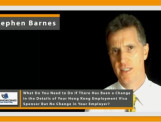
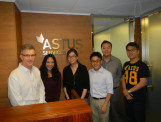
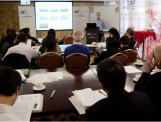
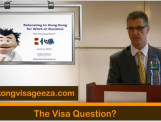
On July 10, 2014 I was invited by the good folks at General Assembly to give an overview talk on Hong Kong visas detailing the opportunities for their foreign national Alumni seeking to remain in Hong Kong after graduating from their excellent programmes.
Here follow the questions raised on Hong Kong visas at the end of the session.
The Rest of the Talk
Introduction
Visa to Work
Own-Business Visa
Top Notch Talent Visa
10 Million Dollar Visa
Loved Ones Visa
Permanent Residency
Appeals
Q&A
More Stuff You May Find Useful or Interesting
Paying for Visa Help? The Who’s-Who of the Hong Kong Immigration Services Industry
100% Hong Kong Visa Application Success Rate? Take It All With a Pinch of Salt
The Visa Geeza on RTHK Radio Three
Sign Up for the 100% Free Hong Kong Visa Extension Kit
Sign Up for the 100% Free Hong Kong Visa D-I-Y Kit
Please select the social network you want to share this page with:


The Hong Kong Visa Geeza (a.k.a Stephen Barnes) is a co-founder of the Hong Kong Visa Centre and author of the Hong Kong Visa Handbook. A law graduate of the London School of Economics, Stephen has been practicing Hong Kong immigration since 1993 and is widely acknowledged as the leading authority on business immigration matters here for the last 24 years.