


Relocating to Hong Kong For Work or Business – The Last 20 Years
Posted by The Visa Geeza / in Employment Visas, Family Visas, Investment Visas, Long Stay & PR, Musing, Refusals & Appeals, Special Programmes, VG Front Page, Visitor Visas / 8 responses
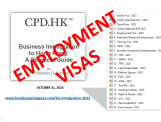
On June 13 I was invited to address the 2013 Monaco Trade Delegation to Hong Kong & China on the question of visas to live and work in Hong Kong.
The presentation delivered to the Monaco Trade Delegation in mid-2012 surveyed the preceding twenty years of Hong Kong immigration practice, defining a landscape marked by administrative gatekeeping, predictability, and a very narrow menu of realistically achievable visa categories. Looking back across the fifteen years from that 2012 benchmark to the present day, the entire machinery of relocating to Hong Kong for work or commercial enterprise has been fundamentally restructured across policy, operational execution, and regulatory enforcement.
In 2012, inbound relocation strategy rested almost exclusively on four traditional entry routes: employer-sponsored General Employment Policy visas, the Admission Scheme for Mainland Talents and Professionals, the Investment as Entrepreneur visa, and the original Capital Investment Entrant Scheme, alongside a slow, quota-limited Quality Migrant Admission Scheme. Across every category, the operational burden required front-loaded justification before setting foot in the territory. Sponsoring companies had to demonstrate local recruitment failure through job market advertisements, prospective founders had to prove upfront economic substantiality, and passive investors had to commit ten million Hong Kong dollars into eligible debt or equities.
Over the fifteen years since that presentation, the immigration landscape has undergone five decisive transformations:
First, the historical hegemony of employer sponsorship has ended. The rollout of non-sponsored admission pathways fundamentally dismantled the old gatekeeping structure. The Top Talent Pass Scheme established an immediate two-year landing permission for high earners making at least two and a half million Hong Kong dollars annually and for graduates of the world’s top one hundred universities, entirely free of upfront job offer requirements. In parallel, the Quality Migrant Admission Scheme was modernized by lifting its legacy annual intake quotas and automating scoring reviews. As a result, tens of thousands of skilled professionals now land in Hong Kong annually holding open, untethered work authorizations, possessing the immediate legal freedom to seek employment, change jobs, or establish independent commercial practices without requiring prior departmental approvals.
Second, the traditional commercial catch-22 confronting prospective business founders has been dismantled. In 2012, entrepreneurs were trapped in a procedural paradox: they could not lawfully work or manage an enterprise on visitor status, yet could not secure an entrepreneur visa without already having committed risk capital, signed non-residential leases, and onboarded local staff. Over the intervening fifteen years, this dilemma was resolved through multiple avenues. The Startup Priority Scheme enabled founders accepted into government-backed incubators like Cyberport and the Science and Technology Parks to bypass traditional turnover and headcount hurdles. Simultaneously, the Top Talent Pass Scheme created an open runway, allowing eligible entrepreneurs to land immediately, incorporate, test commercial viability, and build real operations on the ground for two full years before facing any immigration scrutiny regarding their venture. Meanwhile, the original investment migration channel was suspended and subsequently replaced by the New Capital Investment Entrant Scheme at a higher thirty million Hong Kong dollar threshold, incorporating ring-fenced portfolios and mandatory allocations toward public innovation funds.
Third, administrative friction for sponsoring employers has been drastically reduced in priority industries. In 2012, securing a standard work visa for an expatriate required exhaustive paper proof that no local candidate was available. Today, the introduction and expansion of the official Talent List across dozens of specialized sectors—such as financial technology, environmental governance, data analytics, and healthcare—automatically exempts qualifying employers from the local market-testing requirement. Furthermore, standard duration-of-stay packages relaxed from the old one-year entry stamps to two- or three-year initial permissions, with top-tier earners qualifying for streamlined extensions of up to six years.
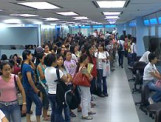
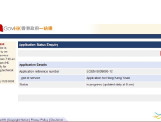
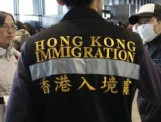
Fourth, the physical administration of immigration has moved entirely into the digital era. In 2012, every transaction required manual lodgments across the counter floors of the Immigration Tower in Wan Chai, culminating in paper visa labels physically pasted into travel documents. That system has been retired in favor of an end-to-end electronic portal issuing downloadable e-Visas embedded with encrypted verification codes. The department marked the completion of this transition by vacating its historic Wan Chai tower and consolidating operations into a modern headquarters facility in Tseung Kwan O.
Fifth, the primary focus of immigration scrutiny has shifted from upfront border admission to downstream compliance auditing. Fifteen years ago, passing through the front gate was the main hurdle, while subsequent renewals were largely administrative formalities. Today, the front door has opened wide to facilitate massive talent inflows, but the regulatory pressure point has moved directly to the first extension of stay and the seven-year Right of Abode assessment. At renewal, authorities conduct cross-agency audits with the Inland Revenue Department and Mandatory Provident Fund schemes, demanding audited profits tax returns, commercial lease agreements, and local payroll records to ensure that talent holders and newly formed companies possess genuine commercial substance rather than operating as empty shell entities.
The Delegation was hosted by my good friends at Rosemont Hong Kong and I covered in a total of 50 minutes the whole sweep of employment and investment based visas as well as the question of permanent residency here eventually.
I have broken the talk down in 12 bite sized chunks under the following headings:
Introduction
The Last 20 Years
Immigration Policy
The Visitor Visa
Job Offer Based Employment Visa
Business Investment Visa
Business Investment Visa Cash Required & Catch 22
Capital Investment Visa
Visas for Accompanying Family
Why Do Applications Get Denied?
Permanent Residency
Q&A
More Stuff You Might Find Useful or Interesting
WRAP UP: How to apply for a Hong Kong investment visa without any professional help – public talk by Stephen Barnes in January 2013
What do both Hong Kong employment and investment visas have in common?
Statistically, what are the chances of your Hong Kong investment visa application being approved?
The industry secret most Hong Kong immigration consultants don’t want you to discover
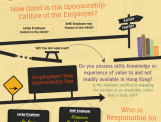
How is the Hong Kong investment visa process actually experienced by the typical foreign national visa applicant?
Please select the social network you want to share this page with:

- Admission of Mainland Talents & Professionals
- Business Investment Visa
- Capital Investment Entrant Scheme
- Defacto Spouse
- Fiance
- Intending Business Investor
- Legal Dependant Visa
- Monaco Trade Delegation
- Non-local Graduate Visa
- Presentation
- Quality Migrant Admission Scheme
- Reconsideration
- Right of Abode
- Rosemont
- Same Sex Partners (PVV)
- Training Visa
- Unconditional Stay
- Work Visa

The Hong Kong Visa Geeza (a.k.a Stephen Barnes) is a co-founder of the Hong Kong Visa Centre and author of the Hong Kong Visa Handbook. A law graduate of the London School of Economics, Stephen has been practicing Hong Kong immigration since 1993 and is widely acknowledged as the leading authority on business immigration matters here for the last 24 years.