


Hong Kong Immigration Administrative Flux … What Does It Mean… ?
Posted by The Visa Geeza / in Employment Visas, Family Visas, Investment Visas, Long Stay & PR, Musing, Refusals & Appeals, Special Programmes, Visitor Visas / 1 response
Hong Kong Immigration Administrative Flux… What Does It Mean… ?
Practice Update 2026 – This content must be read in light of changes to ImmD practice since it was first published
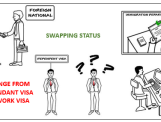
Under Hong Kong immigration practice, navigating changes in personal or commercial circumstances frequently plunges a foreign resident into a state of procedural indeterminacy known as “administrative flux.” In Hong Kong Immigration… What Does It Mean… Administrative Flux?, Stephen Barnes, the Hong Kong Visa Geeza, analyzes this quintessential immigration phenomenon, which arises whenever an individual’s underlying status is transitioning between categories, employers, or permissions—such as shifting from an employment visa to an investment visa, changing corporate sponsors, or moving from dependency to independent employment.
While an applicant’s active permission to stay may remain valid on paper during this period, the operational reality of their daily life has broken away from the original basis upon which that stay was granted. The Immigration Department accommodates these necessary evolutions through established change-of-status procedures, but foreign nationals often face considerable vulnerability if their existing limit of stay expires before the new endorsement is finalized.
Stephen Barnes – The Hong Kong Visa Geeza
With the historical tolerance for unendorsed twilight-zone stays onshore effectively closed, managing administrative flux demands rigorous procedural discipline: applicants must file their applications well before their current permission lapses, ensuring they do not find themselves forced out of the territory or stranded in non-working visitor status while waiting for new residence permissions. To examine how statutory policy provides structured flexibility for temporary specialist engagements during transitional cycles, Stephen Barnes details the operational mechanics in Practice Update: The 2026 Immigration Facilitation Scheme – Short-Term Work for Visitors to Hong Kong.
The essential operational boundary highlighted in the Practice Update is that while the regularized and expanded Short-Term Visitor Facilitation Scheme—spanning 18 designated sectors as of 1 October 2026—provides a legitimate framework for visiting talent, it offers no transitional workaround for individuals experiencing administrative flux within Hong Kong. Under the facilitation arrangements, qualifying international specialists invited by one of roughly 490 government-endorsed host organizations can lawfully undertake pre-approved activities for up to 14 consecutive calendar days per visit without securing a full work visa under the General Employment Policy. However, this concession is strictly external, institutional, and activity-specific; it cannot be repurposed by a local resident whose employment has ended to provide interim consulting, execute a handover, or commence work with a prospective sponsor while their change-of-employer application is pending. As Stephen Barnes makes clear across both publications, an individual whose employment ends must regularize their status through standard administrative pathways rather than attempting to bridge employment gaps via visitor concessions. Whether transitioning between commercial roles or adjusting residence categories, navigating administrative flux requires formal departmental approval before new duties commence, reinforcing that statutory short-term facilitation remains confined to visiting international talent rather than resolving local transitional status dilemmas.
First Published September 6, 2016 Updated October 2026
Over the last 20 years or so I have coined a number of phrases in Hong Kong immigration parlance.
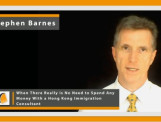
In this short video I discuss the notion of Administrative Flux.
PRACTICE UPDATE: How the content must now be read in light of current ImmD policy:
Historically, this explainer introduced the concept of “Administrative Flux”—the limbo period where a foreign national’s underlying immigration status changes, lapses, or is in the process of formal variation, yet ImmD exercises administrative leniency to accommodate the transition. The Geeza unpacked how applicants could tactically leverage this floating window: whether an employment visa holder had resigned from their job, a visitor was awaiting a pending work approval, or a founder was pivoting between corporate roles, ImmD rarely penalized the individual strictly so long as paperwork was moving in good faith. Case officers routinely granted interim visitor extensions, tolerated pauses between jobs, and allowed aspiring entrepreneurs to spend months in transition setting up lean businesses from serviced offices with modest capital before formalizing their status.
The game has changed from a forgiving period of administrative grace into an unforgiving compliance trap. ImmD has largely eliminated tolerance for indefinite limbo, strictly enforcing the principle that an individual must hold an active, perfectly aligned permission to be present and active in the territory. Allowing an existing employment permission to lapse with the expectation of nursing an entrepreneur application through an extended period of administrative flux will precipitate immediate loss of residence status. Under post-April 2026 administrative practice aligned with TTPS Category A substance (~HKD 2.5M enterprise scale), transition into an entrepreneur visa offers no gradual runway: the corporate vehicle must substantiate HKD 1.5M–2.0M in deployed corporate bank liquidity, an executed commercial lease for exclusive physical premises (“four walls”), and active MPF payroll for 2–3 local permanent residents immediately upon filing. Lacking these empirical operational assets or admission into an accredited government incubator, relying on administrative flux to buy time will result in summary refusal and an abrupt direction to leave Hong Kong.
More Stuff You May Find Useful or Interesting
10 Must Have resources for any Hong Kong investment visa application
Is it actually getting harder to get a Hong Kong investment visa application approved?
I have a socially advantageous yet modestly capitalised business plan – can I get an investment visa for Hong Kong?
Why internet forums are a cr@p source of Hong Kong visa and immigration advice
But Stephen, how do you make any money if you give away all of your Hong Kong visa expertise away for free?
Please select the social network you want to share this page with:

- Admission of Mainland Talents & Professionals
- Applying By Yourself
- Business Investment Visa
- Change of Visa Category
- Change of Visa Sponsorship
- Change of Visa Status
- Changing Jobs
- Entrepreneur
- ImmD System
- Intending Long Stay or PR
- Intercompany Transferee
- Leave Job
- Legal Dependant Visa
- Non-local Graduate Visa
- Ordinary Residence
- Permanent Identity Card
- Quality Migrant Admission Scheme
- Right of Abode
- Settlement
- Training Visa
- Work Visa

The Hong Kong Visa Geeza (a.k.a Stephen Barnes) is a co-founder of the Hong Kong Visa Centre and author of the Hong Kong Visa Handbook. A law graduate of the London School of Economics, Stephen has been practicing Hong Kong immigration since 1993 and is widely acknowledged as the leading authority on business immigration matters here for the last 24 years.