


10 Steps to a Successful Hong Kong Entrepreneur Visa Application – Step 4 – How Do You Make A Substantial Contribution?
Posted by The Visa Geeza / in Investment Visas, Musing / No responses
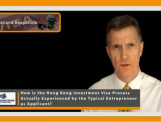
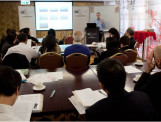
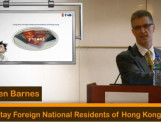
On April 21, 2017 I gave a talk at WYND Co-working space in Lan Kwai Fong entitled 10 Steps to a Successful Hong Kong Entrepreneur Visa Application.
PRACTICE UPDATE: How the content must now be read in light of current ImmD policy:
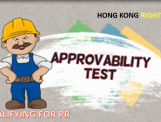
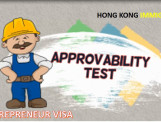
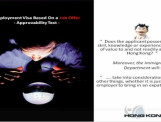
Historically, Step 4 of this series tackled the central legal hurdle under the General Employment Policy: proving that an applicant is in a position to make a “substantial contribution to the economy of the HKSAR.” The Geeza framed this approvability test as an open, qualitative canvas where resourceful entrepreneurs could craft a persuasive narrative around their commercial value. Foreign founders were advised that substantial contribution was not solely measured by sheer capital or instant corporate scale; introducing specialized skills, establishing international trade connections, generating indirect business for local suppliers, and committing modest seed capital of a few hundred thousand dollars from a serviced office desk were routinely accepted by ImmD as sufficient evidence of economic value, with local job creation allowed to follow organically over a two- to three-year period.
The game has changed from a flexible, qualitative narrative into an uncompromising balance-sheet and hardware audit. ImmD no longer accepts theoretical economic contribution, indirect commercial benefits, or forward-looking business plans as proof of value. Under post-April 2026 administrative practice aligned with TTPS Category A operational substance (~HKD 2.5M enterprise scale), substantial contribution is strictly defined by verifiable, day-one infrastructure: HKD 1.5M–2.0M in deployed corporate bank liquidity, an executed commercial lease for exclusive physical premises (“four walls”) disqualifying serviced or co-working desks entirely, and active Mandatory Provident Fund (MPF) payroll contributions for 2–3 local Hong Kong permanent residents. Unless a venture has gained admission into an officially accredited government incubator (such as Cyberport or HKSTP), attempting to argue substantial contribution on the basis of lean capital, boutique consultancy, or projected commercial impact will result in swift and summary refusal.
This segment is Step Four – How Do You Make A Substantial Contribution?
The Rest of the Series
Introduction
How We Got Here
Must Have Resources
The Startup Visa
Step 1 – Understand Policy
Step 2 – Do You Have a Visa Problem?
Step 3 – Are You An Employee?
Step 4 – A Substantial Contribution?
Step 5 – 3 Crucial Elements
Step 6 – Have You Got Enough $$?
Step 7 – A Properly Set Up Office
Step 8 – Creating Local Jobs
Step 9 – Economic Sector Advantages?
Step 10 – D-I-Y Application
DOWNLOADS
Presentation Slides
Accredited Startup Programmes in Hong Kong
More Stuff You May Find Useful or Interesting
10 Must Have Resources for a Hong Kong Investment Visa Application
Joining in a Side Business – An Obvious Visa Solution for Certain Types of Employed Professionals in Hong Kong
Hong Kong Investment Visa Wrongly Applied For – Clearing Up the Confusion & Getting the Correct Employment Visa Instead
Novel Solution to an Unusual Hong Kong Employment-Investment Visa Situation
I’ve lost my job – will I get kicked out of Hong Kong?
Please select the social network you want to share this page with:


The Hong Kong Visa Geeza (a.k.a Stephen Barnes) is a co-founder of the Hong Kong Visa Centre and author of the Hong Kong Visa Handbook. A law graduate of the London School of Economics, Stephen has been practicing Hong Kong immigration since 1993 and is widely acknowledged as the leading authority on business immigration matters here for the last 24 years.