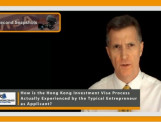
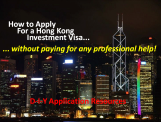
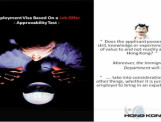
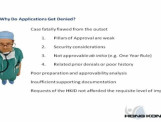
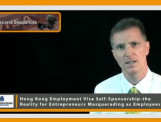
On August 11, 2015 I gave a presentation discussing the so-called Hong Kong Startup visa that everyone is getting so excited about.
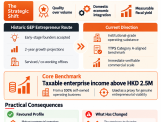
Historically, this analysis examined whether foreign founders could realistically “tick the box” of the government-backed startup enhancement measures, evaluating the practical hurdles of gaining acceptance into recognized state programs. The Geeza treated the incubator-backed route with healthy skepticism, pointing out that meeting the rigid admissions criteria, attending formal pitch panels, and hitting bureaucratic milestones for programs like HKSTP or Cyberport was often an unnecessary administrative headache for agile founders. In that era, “ticking the incubator box” was purely optional: an independent entrepreneur could readily bypass the incubator ecosystem altogether, secure standard discretionary approval under the General Employment Policy with modest seed capital of a few hundred thousand dollars, work out of a flexible serviced office or co-working space, and promise to gradually phase in local hiring over two to three years.
The game has changed from a cumbersome, optional alternative into the single most critical structural gateway in Hong Kong business immigration. Ticking the incubator box is no longer just a shortcut to skip a bit of paperwork—it is the sole statutory mechanism that makes early-stage entrepreneurship viable at all. Under post-April 2026 administrative practice aligned with TTPS Category A operational substance (~HKD 2.5M enterprise scale), un-incubated startups face an impossible empirical audit requiring HKD 1.5M–2.0M in deployed corporate bank liquidity, an executed commercial lease for exclusive physical premises (“four walls”) disqualifying serviced or co-working setups entirely, and active Mandatory Provident Fund (MPF) payroll contributions for 2–3 local permanent residents on day one.
Because of this institutional divide, accredited government programs—specifically flagship initiatives like the Hong Kong Science and Technology Parks Corporation (HKSTP) Incubation Programme, Cyberport Incubation Programme, the Design Incubation Programme (DIP), and related Innovation and Technology Commission (ITC) schemes—now hold an effective statutory monopoly over early-stage founder visas. Formal admission into one of these sanctioned incubators serves as the sole recognized proxy for “substantial contribution,” legally waiving the mandatory HKD 1.5M–2.0M capital deployment, dedicated commercial lease, and immediate MPF headcount rules. For any foreign entrepreneur without the massive balance sheet of an established enterprise, failing to tick the accredited incubator box does not just mean a harder application—it guarantees swift and summary refusal.