


The Hong Kong Startup Visa: Is It All That It’s Cracked Up To Be? – Downloads Available Here
Posted by The Visa Geeza / in Investment Visas, Musing / 11 responses
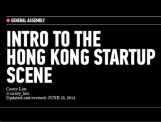
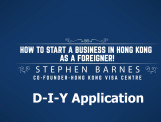
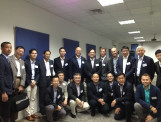
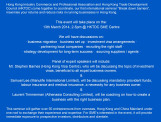
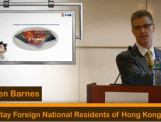
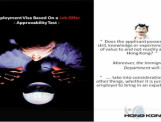
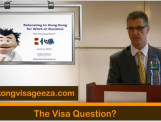
Tonight, I gave a talk at o Connect in Sheung Wan which discussed the so-called ‘Hong Kong Startup Visa‘ introduced on May 4, 2015.

PRACTICE UPDATE: How the content must now be read in light of current ImmD policy:
Historically, this resource post served as the central download hub for the “Startup Visa: Is It All That It’s Cracked Up to Be?” series, providing applicants with direct access to checklists, template documents, forms, and procedural cheat sheets. The Geeza provided these self-service downloads to empower independent founders to assemble their own submissions without needing high-priced representation. In that era, the templates and document guides reflected an accommodating, narrative-driven administrative environment: applicants were guided on how to prepare business plans anchored by modest seed capital of a few hundred thousand dollars, document flexible serviced office agreements or co-working memberships, and outline phased staffing projections that promised to create local jobs over a multi-year horizon. Armed with these downloadable tools, an articulate founder could comfortably satisfy ImmD’s discretionary assessment.
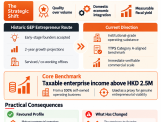
The game has changed from an empowering D-I-Y documentation exercise into a dangerous administrative trap. Handing a founder a traditional business plan template or checklist based on narrative persuasion now does more harm than good, because ImmD no longer evaluates independent entrepreneur applications through discretionary storytelling. Under post-April 2026 administrative practice aligned with TTPS Category A operational substance (~HKD 2.5M enterprise scale), standard checklist templates are utterly irrelevant without empirical, non-negotiable corporate hardware audited on day one: HKD 1.5M–2.0M in deployed corporate bank liquidity, an executed commercial lease for exclusive physical premises (“four walls”) disqualifying serviced and co-working desks entirely, and active Mandatory Provident Fund (MPF) payroll contributions for 2–3 local Hong Kong permanent residents.
Consequently, traditional DIY starter kits and generic templates are dead on arrival for independent ventures. The only “download” or document that fundamentally alters the calculus for an early-stage founder today is an official letter confirming documented, formal admission into an accredited government incubator (such as Cyberport, HKSTP, or the Design Incubation Programme)—the sole statutory instrument that legally waives the mandatory capital deployment, dedicated commercial lease, and immediate MPF payroll requirements. Without that specific institutional proof in hand, submitting a filing based on historical DIY checklists and modest capital projections will result in swift and summary refusal.
The talk was recorded and will be released with extensive coverage on the various government accredited programmes which are recognized by ImmD and which, if accepted, will avail a foreign national entrepreneur a business investment visa to remain in Hong Kong to carry out the plan.
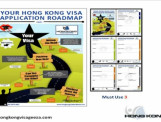
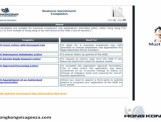
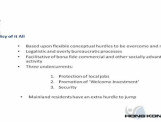
The slides from the talk can be found here.
Our 13 page crib sheet containing the details of these accredited programmes can be found here.
More Stuff You May Find Interesting or Useful
May 4, 2015 Immigration Policy Update – Business Investment Visa Shake Up
Business investment visa in the Hong Kong Visa Handbook
If I get a Hong Kong investment visa can I consult to a single client only as a pseudo-employee?
How to apply for a business investment visa without paying for professional help
10 Must Have resources for any Hong Kong investment visa application
Please select the social network you want to share this page with:


The Hong Kong Visa Geeza (a.k.a Stephen Barnes) is a co-founder of the Hong Kong Visa Centre and author of the Hong Kong Visa Handbook. A law graduate of the London School of Economics, Stephen has been practicing Hong Kong immigration since 1993 and is widely acknowledged as the leading authority on business immigration matters here for the last 24 years.