


Hong Kong Visas From 39,000 Feet @ General Assembly – Visas For Entrepreneurs
Posted by The Visa Geeza / in Investment Visas, Musing / 8 responses
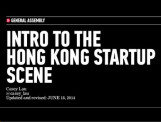
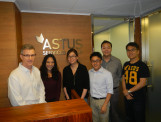
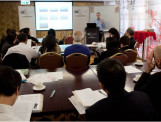
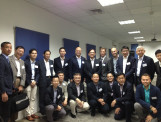
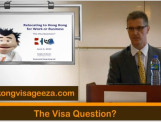
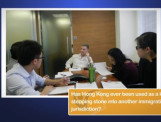
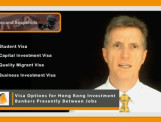
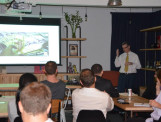
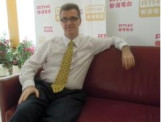
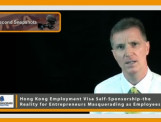
On July 10, 2014 I was invited by the good folks at General Assembly to give an overview talk on the opportunities for their foreign national Alumni seeking to remain in Hong Kong after graduating from their excellent programmes.
PRACTICE UPDATE: How the content must now be read in light of current ImmD policy:
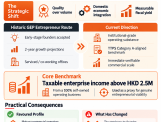
Historically, this presentation transcript and high-altitude overview—delivered to a cohort of startup founders and digital creators at General Assembly—distilled Hong Kong’s business immigration regime from 39,000 feet. The Geeza broke down the Investment as Entrepreneur route under the General Employment Policy (GEP) for a grassroots audience, demystifying the legal concept of substantial contribution to the economy of the HKSAR. In that era, the talk was an exercise in practical empowerment: founders were reassured that Hong Kong’s regulatory framework was built to welcome lean, agile innovation. The Geeza emphasized that securing an entrepreneur visa did not require institutional pedigree, millions in venture backing, or massive balance sheets. An articulate entrepreneur could win approval through discretionary case-by-case assessment by demonstrating modest seed capital of a few hundred thousand dollars, taking a hot desk or dedicated bench in a flexible co-working hub like General Assembly or Garage Society, and laying out a credible commercial narrative promising to phase in local hiring over a two- to three-year ramp-up period.
The game has changed from an empowering 39,000-foot welcome into an uncompromising, binary institutional firewall, which has been further cemented by the 2026 Policy Address focus on innovation and technology. Delivering that same General Assembly presentation today would require warning early-stage tech founders and graduates that the independent, grassroots pathway has been completely dismantled. Under post-April 2026 administrative practice aligned with TTPS Category A operational substance (~HKD 2.5M enterprise scale), ImmD has purged narrative discretion, commercial storytelling, and phased promises from independent entrepreneur assessments. For un-incubated applicants, ImmD enforces a strict compliance audit demanding immediate, day-one corporate hardware: HKD 1.5M–2.0M in deployed corporate bank liquidity sitting in a local bank account, an executed commercial lease for exclusive physical premises (“four walls”) that strictly disqualifies serviced offices, hot desks, and co-working spaces entirely, and active Mandatory Provident Fund (MPF) payroll contributions for 2–3 local Hong Kong permanent residents.
At the same time, the 2026 Policy Address has redirected state resources heavily into strategic tech verticals—artificial intelligence, life sciences, advanced manufacturing, and microelectronics—anchored around the Hetao Shenzhen-Hong Kong Science and Technology Innovation Cooperation Zone and the Northern Metropolis. For technical graduates, this means the government is actively building structured institutional feeder tracks rather than entertaining individual, un-anchored boutique setups.
Graduates and tech founders can now only navigate this landscape through four specific institutional mechanisms:
First, graduates leveraging the Immigration Arrangements for Non-local Graduates (IANG)—including those from Hong Kong universities and their Greater Bay Area campuses such as HKUST Guangzhou or CUHK Shenzhen—hold the rare privilege of an unrestricted right to work and establish a business. This allows them to build products and test market traction without immediate corporate balance-sheet scrutiny, provided they use that runway to secure entry into an accredited incubator before their renewal gate.
Second, foreign tech graduates qualifying under Top Talent Pass Scheme (TTPS) Categories B and C are strongly incentivized to integrate directly into state-backed technology clusters and research centers (such as InnoHK) rather than attempting to self-sponsor uncapitalized ventures at the extension stage, which would trigger the punitive Category A commercial audit.
Third, university spin-offs supported by technology transfer offices and schemes like the Technology Start-up Support Scheme for Universities (TSSSU) receive direct institutional endorsement, effectively shielding academic founders from the traditional corporate hardware audit.
Finally, for any tech graduate lacking IANG or TTPS status, admission into an officially accredited government incubator—primarily Cyberport or the Hong Kong Science and Technology Parks (HKSTP)—remains the absolute statutory prerequisite. In line with the 2026 Policy Address directives, state-backed incubation is the sole recognized mechanism that formally waives the mandatory HKD 1.5M–2.0M liquidity, dedicated commercial lease, and immediate MPF headcount rules. Outside these institutional channels, pitching a bootstrapped tech venture on historical General Assembly assumptions will result in swift and summary refusal.
The Rest of the Talk
Introduction
Visa to Work
Own-Business Visa
Top Notch Talent Visa
10 Million Dollar Visa
Loved Ones Visa
Permanent Residency
Appeals
Q&A
More Stuff You May Find Useful or Interesting
The Hong Kong Investment Visa D-I-Y Kit – 100% Free – Get Yours Today!
Investment Visa Case that Would Get Denied Today But Approved 12 Months Later
Novel Solution to an Unusual Hong Kong Employment – Investment Visa Situation
Can I Employment Myself by Getting a Hong Kong Investment Visa?
UPDATE: All Business Investment Visas Now Routinely Subject to Business Review
Please select the social network you want to share this page with:


The Hong Kong Visa Geeza (a.k.a Stephen Barnes) is a co-founder of the Hong Kong Visa Centre and author of the Hong Kong Visa Handbook. A law graduate of the London School of Economics, Stephen has been practicing Hong Kong immigration since 1993 and is widely acknowledged as the leading authority on business immigration matters here for the last 24 years.