


How to Get a Hong Kong Entrepreneur Visa Approved – The Inside Scoop – The Question of Money
Posted by The Visa Geeza / in Investment Visas, Musing / 5 responses
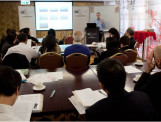
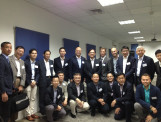
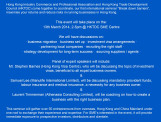
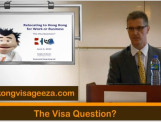
On December 10, 2015 I gave a talk at Centre O Connect in Sheung wan setting out the nitty gritty of the Hong Kong entrepreneur visa since the implementation of the Enhancement Measures on May 6, 2015.
PRACTICE UPDATE: How to read in light of current ImmD policy:
-
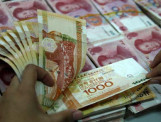
Historical Editorial Standard: In this targeted segment of the Centre O lecture series, the Geeza tackles the perennial query: “How much money do I actually need?” Historically, the presentation dispelled the common misconception that Hong Kong imposes a statutory minimum investment threshold. The Geeza reassured attendees that ImmD did not enforce a rigid dollar figure, explaining that capital adequacy was assessed contextually based on the business model. For service-oriented, digital, or boutique consultancies, having a modest war chest—often cited around HKD 200,000 to HKD 500,000—was considered perfectly sufficient to cover initial operating expenses and startup burn for the first two quarters, with the department remaining flexible if personal offshore wealth or prospective shareholder loans could backstop future growth.
-
Comparative Reading Under the Upgraded Regime: The historical assurance that “there is no fixed magic number” and that a lean startup can get by on a few hundred thousand dollars is now dangerously misleading. While the formal text of the Immigration Ordinance remains silent on a statutory minimum, ImmD’s post-April 2026 administrative practice has established an uncompromising, institutional capital floor. Aligned with the operational substance baseline under Category A of the Top Talent Pass Scheme (TTPS) (~HKD 2.5M enterprise scale), the department’s answer to “the question of money” is now hard-coded:
-
Immediate Deployed Capital Floor: Case officers mandate HKD 1.5 million to HKD 2.0 million in unencumbered, fully deployed risk capital.
-
In-Country Corporate Liquidity: The capital must already be remitted and cleared into an active Hong Kong corporate bank account in the company’s name—offshore personal bank statements, pledges of future funding, letters of credit, and prospective capital calls are completely disregarded.
-
Dedicated Operational Allocation: The funds cannot simply sit as passive reserves; the applicant must demonstrate that this capital is actively committed to real operational burn, specifically funding an executed commercial lease granting exclusive physical possession (“four walls”) and sustaining immediate, market-rate payroll and MPF contributions for 2 to 3 local Hong Kong permanent residents contracted prior to approval.
-
Founders lacking this HKD 1.5M–2.0M liquidity baseline can no longer rely on qualitative arguments or lean burn rates under the standard GEP Entrepreneur route; their sole viable option is to secure entry through an accredited government-backed incubation program (such as Cyberport or HKSTP), where alternative startup facilitation metrics apply.
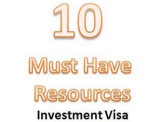
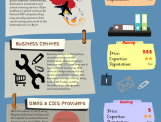
In this segment, I discuss the hoary old chestnut of the ‘minimum amount of cash’ needed to anticipate an approval under the Business Investment Visa. Here, also, are the 10 Must Have Resources discussed in the talk, along with a synopsis of the various accredited programmes found here.
More In This Series
Introduction
How Did We Get Here?
Startup vs. Entrepreneur
Getting Approved
The Question of Money
Passing the Approvability Test
Improve Your Chances
D-I-Y Application
Other Relevant Content
How To Apply for a Hong Kong Business Investment Visa Without Any Professional Help
Hong Kong Entrepreneur Visa (Business Investment) – A Practical Guide
Is the Hong Kong Startup Visa All That It’s Cracked Up to Be?
Hong Kong Visa Handbook – The Entrepreneur Visa
Please select the social network you want to share this page with:


The Hong Kong Visa Geeza (a.k.a Stephen Barnes) is a co-founder of the Hong Kong Visa Centre and author of the Hong Kong Visa Handbook. A law graduate of the London School of Economics, Stephen has been practicing Hong Kong immigration since 1993 and is widely acknowledged as the leading authority on business immigration matters here for the last 24 years.