


Hong Kong Investment Visa – Case Which Would Not Get Approved Today
Posted by The Visa Geeza / in Investment Visas, Refusals & Appeals, Your Question Answered / 10 responses
Hong Kong Investment Visa – Case Which Would Not Get Approved

PRACTICE UPDATE: How the content must now be read in light of current ImmD policy:
Historical Context: Organic Incubation and the Staged Readiness Runway
Historically, as published by the Hong Kong Visa Geeza in Hong Kong Investment Visa Case Which Would Not Get Approved Today But Will Be Approved 9-12 Months From Now, this strategic case analysis examined the concept of deferred readiness for undercapitalized or nascent commercial ventures seeking entry under the General Employment Policy (GEP). The Geeza articulated a pragmatic coaching pathway: identifying an applicant whose business proposal lacked sufficient day-one substance, advising them not to file prematurely, and mapping out a tactical 9- to 12-month runway to build commercial credibility. In that era, “getting ready” was an organic, self-directed journey. An entrepreneur spent those months establishing proofs of concept, building modest revenue, accumulating a few hundred thousand Hong Kong dollars in operating runway, securing a desk in a serviced office or co-working space, and formalizing commercial contracts. Once those qualitative milestones were met, the Immigration Department (ImmD) exercised expansive, holistic discretion to approve the filing, accepting a narrative plan that committed to creating local Hong Kong jobs across a phased two- to three-year ramp-up period.
Modern Reality: The Dissolution of Organic Runways Under the Binary Hardware Audit
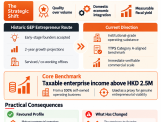
As detailed by the Hong Kong Visa Geeza in A Major Strategic Shift: The Upgraded Assessment Regime for Hong Kong’s Investment as Entrepreneur Visa, the strategy of staging an un-incubated business organically over 9 to 12 months to reach approvability has been completely invalidated. Under post-April 2026 administrative practice aligned with Top Talent Pass Scheme (TTPS) Category A operational substance, benchmarked at an enterprise scale of approximately HKD 2.5 million, ImmD has eliminated qualitative discretion for independent, un-incubated applicants. Case officers no longer reward organic revenue traction, agile proofs of concept, or forward-looking staffing models. Instead, satisfying the statutory “substantial contribution to the economy of the HKSAR” test has been flattened into an inflexible, binary compliance audit demanding verified corporate hardware deployed on day one: HKD 1.5 million to HKD 2.0 million in dedicated corporate liquidity held in a local Hong Kong business bank account; an executed commercial tenancy agreement for exclusive physical premises (four walls), strictly disqualifying serviced offices, virtual addresses, shared desks, and co-working spaces; and active Mandatory Provident Fund (MPF) payroll contributions for two to three full-time local Hong Kong permanent resident employees working on-site from inception.
Strategic Baseline: The Staging Trap vs. The Institutional Incubator Monopoly
Consequently, advising an early-stage founder to spend a year bootstrapping a business in hopes of qualifying for an independent investment visa represents an acute administrative hazard. An un-incubated entrepreneur who spends 12 months executing commercial contracts and conserving capital in a co-working space will still face swift and summary refusal if they lack enterprise-grade physical and payroll infrastructure at lodgment. This instant denial extinguishes lawful visitor stay, prompts an abrupt exit from the territory, and permanently terminates the applicant’s continuous ordinary residence chain required to secure Right of Abode under the seven-year rule. The modern business entry framework enforces an absolute institutional monopoly: formal, documented admission into an officially accredited government incubation program, such as Cyberport, the Hong Kong Science and Technology Parks Corporation (HKSTP), or the Design Incubation Programme, serves as the sole surviving statutory mechanism recognized by ImmD to waive the mandatory upfront liquidity, dedicated commercial lease, and immediate MPF headcount thresholds. Outside this accredited institutional safe harbor, spending 9 to 12 months preparing an un-incubated, bootstrapped venture is futile; applicants must either secure entry into a recognized government program or deploy full enterprise-scale hardware on day one.
This question is a really interesting one as, from an immigration perspective, it suffers from the lack of a compelling reason for the owner of the business to be able to show the Hong Kong Immigration Department that she is in a position to make a substantial contribution to the economy of Hong Kong – today. Next year, however, she may be much better placed…
QUESTION
“I am looking to establish my business in Hong Kong so I would need to get a Business Investment Visa, and I am wondering if you could take a quick look at my situation.
My current situation is this:
• I am a 25 year old woman of Swedish nationality.
• I have a current business (sole proprietorship) in Sweden.
• My business is in Internet Marketing, my main specialisation is in driving traffic (visitors) to e-commerce websites.
• My main partners are Ebay.com and Amazon.com.
• I have been focusing mainly on the American market.
• This business is fully Internet based, which means.
• Me and my employees only need a computer with Internet for work.
• I can relocate my whole business without any problems.
• Currently I have 3 “employees”, all are from the India.
• On average I pay them 8.000 HKD / month for full time work.
• I don’t have any official contracts stating they are my employees, I think they would fall under the category freelancers.
• I started this business officially in 2010.
• In 2010 I made a profit of 22.000 Euro (~210.000 HKD) – 40.000 Euro revenue, 18.000 Euro expenses.
• In 2011 I made a profit of 25.000 Euro (~240.000 HKD) – 51.000 Euro revenue, 26.000 Euro expenses.
• In the first half of 2012 I made around 42.000 Euro revenue (~400.000 HKD). I think the profit over this period should be between 25% and 50% of that.
• I currently have about 42.500 Euro in my bank account.
• I am currently developing a new system.
• I have analysed all of my previous strategies and efforts and designed this system based on that.
• It should be ready before the shopping season at the end of the year, in fact it’s almost in a stage where we can start testing it.
• When the system is finished it should result in a huge boost in revenue and a reliable stream of income.
I don’t have any degrees or certificates for proof of my expertise. I finished school at the age of 18 or 19 and after that I tried studying at the university but that wasn’t for me, so I started something on my own. I then learnt everything I know now through trainings and courses on the Internet and from first hand experience.
Do you think I will get a visa?”
More Stuff You May Find Interesting or Useful
1. Successfully Apply For An Entrepreneur Visa In Hong Kong
While this guide historically advises applicants that a standard two-year forecast, a general demonstration of capital, and an aspirational plan for future job creation suffice to establish economic contribution, it must now be read through an exacting, institutional-grade lens. ImmD no longer accepts speculative, two-year runway models; projections must now encompass a defensible, audited three-year operational horizon backed by verified unit economics. Furthermore, the guide’s references to securing professional premises and general proof of funding must be understood as non-negotiable mandates for an executed, standalone commercial lease (“four walls”) and immediately remitted, unencumbered capital of HKD 1.5M to HKD 2.0M deployed in a functional Hong Kong corporate account, alongside 2 to 3 local permanent residents already enrolled in MPF and drawing payroll at the time of adjudication.
2. Hong Kong Entrepreneur Visa Application Guide In A Nutshell
This summary guide’s traditional assertion that “there is no explicit financial commitment required” and that founders need only capitalize the first two quarters of operations is completely obsolete under the upgraded regime. Applicants can no longer treat capitalization as open-ended or rely on nominal share capital and deferred shareholder injections; the department now operates against the fiscal baseline benchmarked by TTPS Category A, expecting HKD 1.5M to HKD 2.0M in fully realized, deployed liquidity. Additionally, the checklist item requiring a basic “two-year business strategy plan” and flexible premises must now be read as demanding an integrated three-year domestic expansion plan, signed local client/vendor contracts within the domestic ecosystem, and an exclusive, physically demarcated commercial tenancy rather than virtual or co-working arrangements.
3. Hong Kong Investment Visa – The 3 Legs of the Application Approvability Stool
The classic “three-legged stool” framework—historically balancing capital, local employment, and substantial economic contribution as flexible, qualitative benchmarks evaluated on prospective intent—has hardened into a rigid, pre-conditioned compliance threshold. Readers can no longer view local employment and capital investment as flexible milestones to be achieved gradually downstream; ImmD now treats 2 to 3 full-time local staff on active payroll and deployed cash reserves as prerequisite baseline infrastructure that must exist prior to approval. The qualitative prong of “substantial contribution” is now practically measured against TTPS Category A commercial viability (akin to HKD 2.5M enterprise-level capacity), meaning modest, asset-light advisory models can no longer balance weak capital deployment with high-concept professional expertise alone.
4. How To Get A Hong Kong Entrepreneur Visa (The Catch-22)
How to read in light of current ImmD policy:
The foundational advice regarding the “Catch-22″—which historically encouraged in-country applicants and employees seeking a change of status to file right at the outset before significant trading to avoid working illegally—must be completely recalibrated against ImmD’s refusal to approve early-stage proposals. Because the department now explicitly bars the traditional “employee-to-founder” transition for asset-light, undercapitalized consultancies and demands fully mobilized operations (active commercial tenancy, active local payroll, and fully funded corporate accounts) prior to endorsement, filing at mere inception without established institutional backing invites summary rejection. Founders must now bridge this Catch-22 either by establishing institutional-grade operational footprints and deploying substantial capital through authorized local directors/representatives before entry clearance, or by qualifying through designated government-backed incubation schemes like Cyberport or HKSTP.
5. Hong Kong Investment Visa for an Unprofitable Company – Easy or Hard?
How to read in light of current ImmD policy:
Where this guidance previously suggested that struggling, pre-profit, or turnaround entities could sponsor an incoming partner by simply demonstrating turnover, an operational space, and a credible forward-looking plan for downstream growth, it must now be read with extreme caution. Under ImmD’s alignment with TTPS Category A commercial substance, the department actively filters out under-capitalized or stagnant vehicles, demanding verifiable solvency, immediate capital infusions (HKD 1.5M–2.0M deployed), and verified domestic supply chain integration rather than speculative turnaround promises. An unprofitable entity cannot rely on future projections to justify an incoming foreign national entrepreneur unless it can demonstrate that 2 to 3 local permanent residents are already securely employed and that the venture possesses the unencumbered liquidity required to sustain multi-year operations as an institutional enterprise.
| PODCAST ANSWER |  |

Podcast: Play in new window
Please select the social network you want to share this page with:


The Hong Kong Visa Geeza (a.k.a Stephen Barnes) is a co-founder of the Hong Kong Visa Centre and author of the Hong Kong Visa Handbook. A law graduate of the London School of Economics, Stephen has been practicing Hong Kong immigration since 1993 and is widely acknowledged as the leading authority on business immigration matters here for the last 24 years.