


Foreign National Entrepreneurs Starting Up in Hong Kong or China – Where is Better for Visas?
Posted by The Visa Geeza / in Investment Visas, Musing / 2 responses

PRACTICE UPDATE: How the content must now be read in light of current ImmD policy:
Historically, this comparative advisory piece tackled the strategic dilemma faced by international founders weighing whether to base their operations in Hong Kong versus Mainland China (the PRC), specifically contrasting the visa and regulatory regimes of both jurisdictions. The Geeza drew a sharp, unequivocal contrast: while the Mainland’s immigration and enterprise establishment systems were notoriously opaque, bureaucratic, and burdened by rigid capital verification reports (验资报告) and strict foreign-invested enterprise (WFOE/FIE) hurdles, Hong Kong stood out as the open, agile, and friction-free common law alternative. In that era, the Geeza championed Hong Kong’s Investment as Entrepreneur visa under the General Employment Policy (GEP) as the obvious choice for foreign founders. ImmD operated with wide administrative discretion and commercial empathy, allowing an entrepreneur to comfortably incorporate, secure residence, and launch with modest seed capital of a few hundred thousand dollars, a flexible desk in a serviced office or co-working space, and a phased commercial plan committing to hire local staff over a two- to three-year ramp-up period.
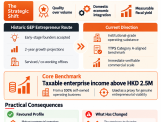
The game has changed from an open, agile contrast into an unexpected institutional convergence. While Hong Kong retains its common law system, free capital convertibility, and territorial tax regime, its business immigration gateway for independent foreign founders has become just as rigidly audited and hardware-dependent as the traditional Mainland structures it once contrasted against. Under post-April 2026 administrative practice aligned with TTPS Category A operational substance (~HKD 2.5M enterprise scale), ImmD has completely excised discretionary leniency and phased narrative timelines from independent entrepreneur adjudications. The idea that Hong Kong is a low-barrier, bootstrapped stepping stone for Western or international founders looking to access the Greater Bay Area or broader Asian markets is completely defunct for un-incubated applicants.
Today, choosing Hong Kong over the Mainland for an independent venture no longer spares a founder from heavy upfront capital and operational mandates. Outside the state-backed innovation tracks, ImmD subjects applicants to an unforgiving, binary compliance audit audited on day one: HKD 1.5M–2.0M in deployed corporate bank liquidity sitting in a local bank account, an executed commercial lease for exclusive physical premises (“four walls”) that strictly disqualifies serviced offices, shared desks, and co-working spaces entirely, and active Mandatory Provident Fund (MPF) payroll contributions for 2–3 local Hong Kong permanent residents.
Consequently, the core premise of this historical comparison—that Hong Kong is the easy, low-overhead regulatory launchpad for foreign startups—is dead. Hong Kong’s business entry framework now enforces a strict institutional monopoly: formal, documented admission into an officially accredited government incubator (such as Cyberport, HKSTP, or the Design Incubation Programme) is the sole statutory instrument recognized by ImmD to waive the mandatory day-one capital deployment, dedicated commercial lease, and immediate MPF headcount thresholds. Outside this accredited institutional safe harbor, independent foreign entrepreneurs face an empirical firewall just as unforgiving as any traditional foreign enterprise registration, where attempting to launch on a shoestring budget results in swift and summary refusal.
Paul Bischoff recently laid bare the visa and immigration problems which entrepreneurs (and intending foreign national residents generally for that matter) face when seeking to set up in China in this provocative piece in TechinAsia.com (read the comments especially).
China has always been a hard place to meet any level of commercial success, no matter what business you’re in and I gave up trying to make any money there many, many years ago.
The streets of Hong Kong are paved with gold after all so why put yourself through all that expense, frustration, bureaucracy and uncertainty when you can ground yourself here, learn the ropes locally, gain some valuable experience in the HKSAR and then really understand what the challenges of China are actually all about?
Of course, if you feel that China is where the action is for you, then you need to be there, not here.
However, experience has taught me that if you feel you can make it work in China you almost certainly will be able to make it work in (or based out of) Hong Kong so why plunge directly into China if you can mitigate your risk by getting your biz off the ground in Hong Kong first?
Certainly, Hong Kong’s immigration rules and regulations are nowhere near as cumbersome as they are across the boundary and the HKSAR government genuinely welcomes investment here and prides itself on a scheme of ‘light touch’ regulation.
A dozen years ago, I spent several weeks researching the ins and outs of establishing an immigration practice in China and came to the conclusion that it was all too hard.
It’s getting harder too, no doubt about that at all.
Indeed, just last week I was approached by an entrepreneur seeking to relocate her successful business from China to Hong Kong as the recent immigration changes there have effectively chased her out of the Middle Kingdom.
I expect to see more of this too.
So, China or Hong Kong?
Easy.
Hong Kong is a breeze. China is a slog.
Isn’t a new business hard enough to get off the ground and on to profitability without visa uncertainties hanging over your head like the Sword of Damocles?
More Stuff You May Find Interesting or Useful
Relocating to Hong Kong for work or business – Immigration Policy
Is the Hong Kong Immigration Department website actually fit for purpose?
The anatomy of a Capital Investment Entrant Scheme pathway to a HKSAR passport for a Chinese national resident on the mainland
Do mainlanders enjoy the same kind of immigration experience as other foreign nationals do in Hong Kong?
10 Must Have resources for a Hong Kong investment visa application
Please select the social network you want to share this page with:


The Hong Kong Visa Geeza (a.k.a Stephen Barnes) is a co-founder of the Hong Kong Visa Centre and author of the Hong Kong Visa Handbook. A law graduate of the London School of Economics, Stephen has been practicing Hong Kong immigration since 1993 and is widely acknowledged as the leading authority on business immigration matters here for the last 24 years.