


10 Steps to a Successful Hong Kong Entrepreneur Visa Application – How We Got Here
Posted by The Visa Geeza / in Investment Visas, Musing / No responses
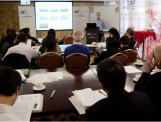
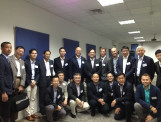
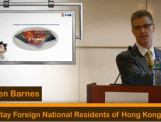
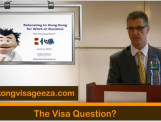
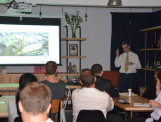
On April 21, 2017 I gave a talk at WYND Co-working space in Lan Kwai Fong entitled 10 Steps to a Successful Hong Kong Entrepreneur Visa Application.
PRACTICE UPDATE: How the content must now be read in light of current ImmD policy:
Historically, this introductory context piece in the 10-step series traced the policy origins and administrative trajectory of Hong Kong’s investment as entrepreneur regime, explaining the rationale behind the 2015 Enhancement Measures and the 2016 Audit Commission Report No. 66. The Geeza provided founders with crucial historical perspective, showing how ImmD had transitioned from opaque, ad-hoc assessments toward a more structured statutory framework centered on assessing “substantial contribution.” Yet, throughout this evolutionary period, the operational heart of the policy remained grounded in practical commercial leeway: case officers continued to exercise broad administrative discretion, welcoming foreign founders of lean, bootstrapped ventures who brought modest seed funding of a few hundred thousand dollars, operated flexibly from serviced offices or co-working spaces, and planned to gradually hire local staff over a multi-year horizon.
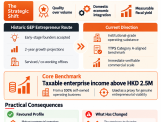
The game has changed from an evolutionary administrative history into an abrupt, unforgiving institutional reset. The historical narrative of gradual bureaucratic adjustments and administrative tolerance for lean startups has been decisively closed. Under post-April 2026 administrative practice aligned with TTPS Category A operational substance (~HKD 2.5M enterprise scale), ImmD no longer treats entrepreneur policy as a nurturing, discretionary mechanism for early-stage commercial aspirations. Adjudication is now governed by an unyielding empirical audit requiring day-one corporate hardware: HKD 1.5M–2.0M in deployed corporate bank liquidity, an executed commercial lease for exclusive physical premises (“four walls”) disqualifying serviced offices and co-working desks entirely, and active Mandatory Provident Fund (MPF) payroll contributions for 2–3 local permanent residents. Unless an applicant holds formal admission into an officially accredited government incubator (such as Cyberport or HKSTP), relying on the historical context of administrative leniency will result in swift and summary refusal.
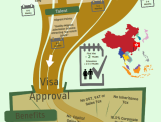
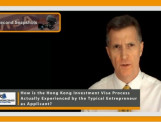
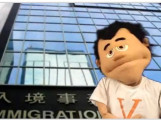
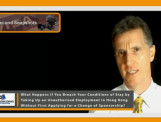
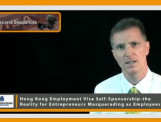
This short video sets out the background to the entrepreneur vs startup visa situation which prevails in Hong Kong today.
The Rest of the Series
Introduction
How We Got Here
Must Have Resources
The Startup Visa
Step 1 – Understand Policy
Step 2 – Do You Have a Visa Problem?
Step 3 – Are You An Employee?
Step 4 – A Substantial Contribution?
Step 5 – 3 Crucial Elements
Step 6 – Have You Got Enough $$?
Step 7 – A Properly Set Up Office
Step 8 – Creating Local Jobs
Step 9 – Economic Sector Advantages?
Step 10 – D-I-Y Application
DOWNLOADS
Presentation Slides
Accredited Startup Programmes in Hong Kong
More Stuff You May Find Useful or Interesting
Checking the status of your Hong Kong visa application on line – yeah right!
The Hong Kong Immigration Department are out to refuse – not approve – visa applications (aren’t they?)
ImmD – what an efficient organisation they really are!
Winning a Hong Kong right of abode application in record time – just 4 days!
How to Gee Up a Hong Kong visa application that is taking too long to finalise
Please select the social network you want to share this page with:


The Hong Kong Visa Geeza (a.k.a Stephen Barnes) is a co-founder of the Hong Kong Visa Centre and author of the Hong Kong Visa Handbook. A law graduate of the London School of Economics, Stephen has been practicing Hong Kong immigration since 1993 and is widely acknowledged as the leading authority on business immigration matters here for the last 24 years.