


The New Hong Kong Capital Investment Entrant Scheme | Starts in 2024 | Some Details Are Released
Posted by The Visa Geeza / in Investment Visas, Musing / No responses
The Capital Investment Entrant Scheme | To Re-Start In 2024 | HKD30M | A Big Boy’s Play …
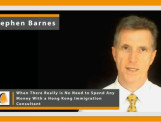
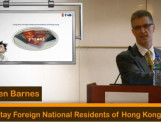
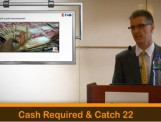
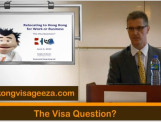
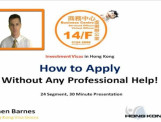
Stephen Barnes’ Comments On RTHK News Today
PRACTICE UPDATE – October 2026
1. Investment Asset Breakdown & Residential Property Relaxation
-
Total Threshold: Maintained at HK$30 million (net asset value verified across the 2 years preceding the application).
-
Residential Real Estate: Investors can purchase residential property, provided the transaction price of a single residential property is HK$50 million or above.
-
The amount of real estate investment that can count toward the HK$30 million requirement is capped at HK$10 million (whether non-residential or luxury residential).
-
-
Non-Residential Real Estate: Still eligible, sharing the same aggregate HK$10 million cap.
-
Financial Assets (HK$17M to HK$27M minimum): Equities, debt securities, certificates of deposit (capped at HK$3 million), SFC-authorized funds, and eligible limited partnership funds.
-
CIES Investment Portfolio (HK$3 million ring-fenced): Managed by the Hong Kong Investment Corporation (HKIC) to support innovation, technology, and strategic local industries. This remains mandatory, locked, and cannot be substituted with real estate or equities.
2. Family Offices & Eligible Entity Ownership
3. Nationality & Overseas Chinese PR Verification
-
The Immigration Department (ImmD) accepts Chinese nationals who have obtained permanent resident status overseas (e.g., Vanuatu, Sierra Leone, or other foreign PRs).
-
The assessment requires formal proof of genuine foreign permanent residency and clean background checks, but the practice of using third-country PR remains an actively utilized gateway for Mainland investors.
-
Nationals of Afghanistan, Cuba, and North Korea remain excluded.
4. Administrative Division of Labor: InvestHK vs. ImmD
-
InvestHK (New CIES Office): Evaluates financial eligibility, certifies the 2-year prior net assets (HK$30 million), and conducts mandatory annual portfolio portfolio-maintenance assessments. Applicants must engage a Certified Public Accountant (CPA) registered in Hong Kong to prepare an independent financial assessment report before submitting to InvestHK.
-
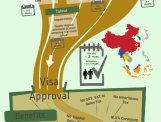
Immigration Department (ImmD): Issues the entry visas. Upon receiving the financial eligibility certificate from InvestHK, ImmD grants Approval-in-Principle (valid for 180 days) on visitor status to allow entry to execute the HK$30 million investment, followed by Formal Approval (2 years initial stay), extendable on a
2 + 3 + 3pattern.
5. Path to Permanent Residency vs. Unconditional Stay
-
Permanent Residency (Right of Abode): Requires proving “ordinary residence” (physical presence, habitual residence, center of life).
-
Unconditional Stay: For investors who do not relocate physically or fail the strict continuous residence test for PR, they can apply for Unconditional Stay after 7 years. This status allows them to completely liquidate or repatriate their HK$30 million qualifying investments while retaining the right to enter and stay in Hong Kong without visa constraints (requiring at least one visit to Hong Kong every 12 months to prevent expiration).
Capital Investment Entrant Scheme
On December 19, 2023 the Hong Kong government announced a new scheme aimed at attracting foreign investment and talent, known as the Capital Investment Entrant Scheme. This initiative targets individuals aged 18 and above, including foreigners, residents of Taiwan and Macau, and Chinese nationals with permanent resident status in other countries.
Qualifying
To qualify, applicants must possess a net asset value of at least 30 million Hong Kong dollars (c.USD3.8M) in the two years prior to applying, investing a minimum of HKD27 million in non-residential property and qualifying financial assets like stocks or bonds, and an additional HKD3 million invested in innovation and technology.
No Targets
Christopher Ho, the Financial Services Chief, mentioned that the Capital Investment Entrant Scheme is a revival of the previous one suspended in 2015, but without specific targets for the number of applicants. The earlier scheme attracted about 4000 applicants annually, potentially bringing in 120 billion Hong Kong dollars of new money.
Commences 2024
Applications for the revamped Capital Investment Entrant Scheme are expected to open in the first half of the next year.
Visa Geeza Speaks
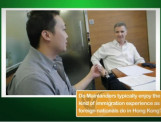
In an interview on RTHK Radio 3 News this morning, Hong Kong immigration consultant Stephen Barnes shares his insights. He views the scheme as a valuable addition to Hong Kong’s immigration programs, particularly filling a gap for passive investment opportunities that emerged after the suspension of the previous scheme in 2015.
Chinese With A Foreign PR?
The Capital Investment Entrant Scheme is open to a wide range of foreign nationals, including Chinese nationals with foreign permanent resident status, but excludes certain groups like North Koreans and Cubans. An interesting aspect is the inclusion of Chinese nationals with foreign PR, a group that was able to participate in the last scheme through PR obtained, often conveniently, from countries mostly in Africa.
Small Biz Gets A Look In
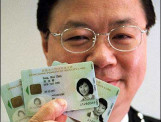
Barnes believes the Capital Investment Entrant Scheme will primarily attract wealthy individuals capable of investing HKD30 million in Hong Kong, a requirement for obtaining a Hong Kong identity card. He suggests that the scheme might be particularly appealing to individuals from the Middle East. The requirement of a HKD3 million investment in the IT sector via the Hong Kong Investment Corporaton is seen as a positive step, providing support to innovative small businesses in Hong Kong.
4000 Annually?
While the Financial Services minister did not set a hard target, Barnes is skeptical about reaching the 4000 applicants mark annually, given the stringent requirements and the fact that the Capital Investment Entrant Scheme does not offer a passport, but permanent residency after seven years of ordinarily residing in Hong Kong.
Much, Barnes says, will turn on how the definition of “PR in a foreign country” will be construed as applied to ‘Overseas Chinese’. The overwheming majority of the 4000 applicants per year under the previous Capital Investment Entrant Scheme programme were Chinese nationals owning ‘overnight PR of convenience’.
After 7 Years
He also notes that after seven years, participants can opt for unconditional stay, allowing them to withdraw their investment while maintaining residency, provided they visit Hong Kong at least once every 12 months.
Role of InvestHK
Barnes suggests that the success of the scheme will depend on its implementation details, particularly how the government agency InvestHK manages the assessment and certification of the HKD30 million wealth requirement and the investment in the right asset classes.
He expresses a cautious optimism about the role of InvestHK in this process, acknowledging the unpredictability when government departments handle such ‘free market’ initiatives.
Wait & See
The launch in 2024 will reveal more about the scheme’s effectiveness and its impact on Hong Kong’s economy and immigration landscape.
VisaGeeza.Ai – Making Hong Kong Immigration A Lot Easier

VisaGeeza.Ai – 13 Years In The Making
Check Out VisaGeeza.Ai
All Our Know-How: All Our Experience: Fully Interactive
100% FREE!
More Stuff You Might Find Useful or Interesting
Do You Have A Business Plan Template For My Hong Kong Investment (Entrepreneur) Visa Application?
The Double-Edged Blade Of A Hong Kong Entrepreneur Visa Approval
Can I Employ Myself By Getting A Hong Kong Business Investment Visa?
How To Engage The Hong Kong Visa Centre If Your Immigration Application Has Been Refused
What Happens If You Overstay Your Hong Kong Visa Limit Of Stay?
Please select the social network you want to share this page with:


The Hong Kong Visa Geeza (a.k.a Stephen Barnes) is a co-founder of the Hong Kong Visa Centre and author of the Hong Kong Visa Handbook. A law graduate of the London School of Economics, Stephen has been practicing Hong Kong immigration since 1993 and is widely acknowledged as the leading authority on business immigration matters here for the last 24 years.