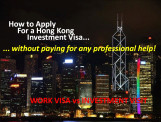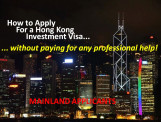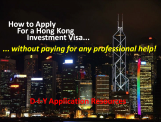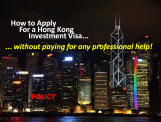



How to Apply For a Hong Kong Investment Visa Without Paying for Professional Help – 1 – Introduction
Posted by The Visa Geeza / in Investment Visas, Musing, Resource, VG Front Page / 2 responses
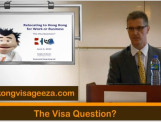
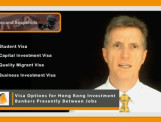
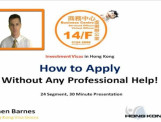
I have given this talk around town for the last couple of years now and so pleased to finally add it to our coverage of the Hong Kong investment visa.
PRACTICE UPDATE: How the content must now be read in light of current ImmD policy:
-
Historical Editorial Standard: This foundational introductory lecture sets the stage for the entire DIY curriculum by framing the GEP Investment as Entrepreneur visa as an achievable, self-navigated pathway for independent founders, solo practitioners, and small business owners willing to do the legwork. It introduces the application journey as an exercise in presenting a compelling commercial narrative, demystifying ImmD’s expectations, and demonstrating how a well-structured plan on a modest budget can secure entry clearance without the need for expensive professional representation.
-
Comparative Reading Under the Upgraded Regime: The welcoming premise that an everyday entrepreneur can bootstrap their way through a DIY application using standard templates and high-level commercial concepts must now be completely re-anchored. This introduction can no longer present the entrepreneur route as accessible to early-stage, under-resourced founders or departing corporate employees launching lifestyle consultancies. Instead, it must serve as an upfront reality check: self-filing is now only feasible if the applicant is heading a fully mobilized, institutional-grade commercial enterprise capable of satisfying the TTPS Category A operational proxy. Prospective DIY applicants must be told at the very outset that unless their submission dossier contains verified proof of HKD 1.5M to HKD 2.0M in unencumbered deployed capital, an executed commercial lease for dedicated physical premises (“four walls”), and 2 to 3 local permanent residents actively drawing market salaries on MPF schemes, relying on a DIY approach will result in immediate requisitions or summary refusal. For non-institutional or early-stage startups, the introduction must now direct them away from standard GEP self-filing and toward recognized government-backed incubation pathways (such as Cyberport or HKSTP) as their primary viable route.
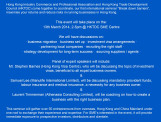
The talk was graciously hosted at WYND Co-working Space, ran by a group of great people who I have a lot of time for.
The Complete Talk in Logical Segments
1 – Introduction
2 – Policy
3 – Visa Problem?
4 – Mainlanders
5 – Visitors
6 – Work Visa?
7 – Investment Visa?
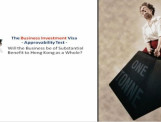
8 – Approvability Test
9 – Cash Needed
10 – Catch 22
11 – Loved Ones
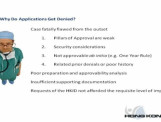
12 – Visa Refused?
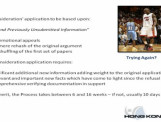
13 – Trying Again
14 – D-I-Y
More Stuff You May Find Useful or Interesting
10 Must Have resources for a Hong Kong investment visa application
Is there such an animal as a flexible working visa in Hong Kong?
Hong Kong investment visa – cash required and the Catch 22
Is there such a thing as a Hong Kong employment visa for an independant contractor?
Is it possible to cancel a Hong Kong visa application and if so how do you go about doing it?
Please select the social network you want to share this page with:


The Hong Kong Visa Geeza (a.k.a Stephen Barnes) is a co-founder of the Hong Kong Visa Centre and author of the Hong Kong Visa Handbook. A law graduate of the London School of Economics, Stephen has been practicing Hong Kong immigration since 1993 and is widely acknowledged as the leading authority on business immigration matters here for the last 24 years.