


Relocating to Hong Kong For Work or Business – The Visa Question (Introduction)
Posted by The Visa Geeza / in Employment Visas, Family Visas, Investment Visas, Long Stay & PR, Musing, Refusals & Appeals, Resource, Special Programmes, Visitor Visas / 15 responses
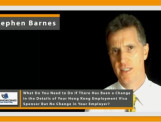
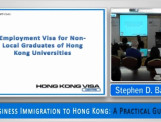
On June 13 I was invited to address the 2013 Monaco Trade Delegation to Hong Kong & China on the question of visas to live and work in Hong Kong.
PRACTICE UPDATE: How the content must now be read in light of current ImmD policy regarding Entrepreneur visas:
The post introducing the presentation to the Monaco Trade Delegation, titled Relocating to Hong Kong For Work or Business The Visa Question (Introduction), served as the launchpad for a comprehensive twelve-part breakdown of the Hong Kong immigration system as it stood in mid-2012. The foundational premise of that series was straightforward: every foreign national seeking to live, work, or establish a commercial enterprise in Hong Kong had to solve The Visa Question through a narrow, rigid menu of realistic options, primarily employer-sponsored employment visas, business investment visas, or passive capital investment, all converging on the ultimate goal of Permanent Residency after seven years of continuous ordinary residence.
Reviewing that foundational premise against contemporary practice reveals that nearly every structural assumption underpinning The Visa Question has been rewritten.
In 2012, solving the visa question was essentially a binary exercise for working professionals: either secure an employer willing to sponsor a General Employment Policy visa, or put personal capital at risk through an Investment as Entrepreneur application. The Quality Migrant Admission Scheme was treated as a marginal, slow-moving footnote with strict annual quotas. Today, the core menu is dominated by open, non-sponsored talent admission routes. The introduction of the Top Talent Pass Scheme and the removal of annual intake caps under the Quality Migrant Admission Scheme created vast pipelines where neither an employer sponsor nor a pre-approved business plan is required to land. Relocating professionals can obtain an open two-year permission to land simply based on verified annual income or academic pedigree from top global universities, bypassing the traditional employment versus entrepreneur choice entirely.
For entrepreneurs, the 2012 framework set out a grueling upfront hurdle. Founders faced the commercial catch-22 of satisfying the strict substantial contribution to the economy test, which required signed commercial leases, committed capital, and local staff hiring before immigration clearance would be granted. In contemporary practice, this barrier has been completely restructured. Early-stage technology founders can use the Startup Priority Scheme to leverage government-accredited incubator backing as an automatic proxy for commercial approvability. Meanwhile, eligible founders routinely enter on Top Talent Pass Scheme visas, using the initial two-year grant as an operational runway to incorporate, lease space, and build commercial viability on the ground before facing any substantive business assessment at the extension stage.
On the capital investment front, the 2012 introduction highlighted the original Capital Investment Entrant Scheme at a ten million Hong Kong dollar threshold. That scheme was terminated in early 2015 to refocus policy on active working talent, and has since been replaced by the New Capital Investment Entrant Scheme. The current mechanism operates at a much higher threshold of thirty million Hong Kong dollars, requiring mandatory allocations into state-backed innovation funds alongside permissible financial assets, tightly integrating with Hong Kong’s family office tax regime.
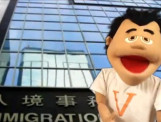
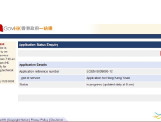
Administratively, the operational world described in 2012 has vanished. The days of submitting paper dossiers at the Wan Chai Immigration Tower, waiting for physical visa endorsement labels, and attending in-person counter interviews have been replaced by an end-to-end digital ecosystem. Applications, notifications, payments, and approvals are executed electronically, generating downloadable e-Visas embedded with encrypted verification codes. The department marked the completion of this transition by vacating its historic Wan Chai tower and consolidating operations at a purpose-built headquarters facility in Tseung Kwan O.
Finally, the nature of regulatory scrutiny regarding the ultimate prize of Permanent Residency has shifted dramatically. In 2012, obtaining the initial entry visa was the primary hurdle, with renewals and seven-year Right of Abode applications viewed as largely routine for anyone who maintained their stay. Today, because entry has been streamlined to attract massive talent inflows, the primary compliance filter has moved to downstream visa extensions and permanent residency assessments. The Immigration Department now conducts forensic cross-agency audits involving tax returns, mandatory provident fund contributions, and proof of continuous habitual residence. While landing in Hong Kong has never been easier, securing unconditional permanent residence after seven years demands undeniable evidence of genuine, substantive integration into the fabric of the territory.
The Delegation was hosted by my good friends at Rosemont Hong Kong and I covered in a total of 50 minutes the whole sweep of employment and investment based visas as well as the question of permanent residency here eventually.
I have broken the talk down in 12 bite sized chunks under the following headings:
Introduction
The Last 20 Years
Immigration Policy
The Visitor Visa
Job Offer Based Employment Visa
Business Investment Visa
Business Investment Visa Cash Required & Catch 22
Capital Investment Visa
Visas for Accompanying Family
Why Do Applications Get Denied?
Permanent Residency
Q&A
More Stuff You Might Find Useful or Interesting
I know the Immigration Department website is a black hole for denied visa applicants so what happens now?
10 Must Have resources for a successful Hong Kong permanent residency application
Why and how Hong Kong seeks to attract foreign national talent
STOP PRESS!..Hitler’s HKSAR passport application has just been rejected
Please help me by asking me immigration questions that I can actually answer!
Please select the social network you want to share this page with:

- Admission of Mainland Talents & Professionals
- Business Investment Visa
- Capital Investment Entrant Scheme
- Defacto Spouse
- Fiance
- Intending Business Investor
- Legal Dependant Visa
- Monaco Trade Delegation
- Non-local Graduate Visa
- Presentation
- Quality Migrant Admission Scheme
- Reconsideration
- Right of Abode
- Rosemont
- Same Sex Partners (PVV)
- Training Visa
- Unconditional Stay
- Work Visa

The Hong Kong Visa Geeza (a.k.a Stephen Barnes) is a co-founder of the Hong Kong Visa Centre and author of the Hong Kong Visa Handbook. A law graduate of the London School of Economics, Stephen has been practicing Hong Kong immigration since 1993 and is widely acknowledged as the leading authority on business immigration matters here for the last 24 years.