


Relocating to Hong Kong For Work or Business – Immigration Policy
Posted by The Visa Geeza / in Employment Visas, Family Visas, Investment Visas, Long Stay & PR, Musing, Refusals & Appeals, Special Programmes, Visitor Visas / 9 responses
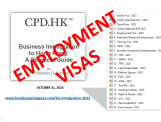
On June 13 I was invited to address the 2013 Monaco Trade Delegation to Hong Kong & China on the question of visas to live and work in Hong Kong.
PRACTICE UPDATE: How the content must now be read in light of current ImmD policy:
Historically, this policy-level overview established the macro framework of Hong Kong immigration law for inbound professionals and founders, outlining the philosophical rationale behind the General Employment Policy (GEP) and the statutory “substantial contribution to the economy of the HKSAR” test. The Geeza contextualized immigration policy not as an adversarial barrier, but as an economic instrument designed to facilitate international commerce, attract managerial talent, and maintain Hong Kong’s status as Asia’s world city. In that era, immigration policy was applied with vast administrative discretion and practical elasticity: ImmD operated on an ethos of economic enablement. Case officers actively weighed the holistic value of an inbound applicant—recognizing that an energetic founder bringing international relationships, professional pedigree, and specialized expertise was an asset to the territory even if they arrived with modest seed capital of a few hundred thousand dollars, operated out of a flexible serviced office or co-working space, and planned to phase in local hiring over a two- to three-year commercial ramp-up period.
The game has changed from an enabling economic policy managed through administrative discretion into a rigid, state-directed regulatory architecture governed by binary compliance audits. In the wake of massive talent scheme rollouts (TTPS, revamped QMAS) and the reintroduction of the New Capital Investment Entrant Scheme (New CIES at HKD 30M), the underlying philosophy of Hong Kong immigration policy has been completely overhauled. Immigration policy has abandoned the concept of qualitative discretion for un-incubated businesses. Under post-April 2026 administrative practice aligned with TTPS Category A operational substance (~HKD 2.5M enterprise scale), the policy mandate is no longer to accommodate early-stage, lean commercial experimentation. Instead, ImmD’s policy directive enforces an unyielding empirical compliance audit on day one: HKD 1.5M–2.0M in deployed corporate bank liquidity sitting in a local bank account, an executed commercial lease for exclusive physical premises (“four walls”) that strictly disqualifies serviced offices, shared spaces, and co-working desks entirely, and active Mandatory Provident Fund (MPF) payroll contributions for 2–3 local Hong Kong permanent residents.
Consequently, the entire policy thesis articulated in this historical guide is completely obsolete for independent founders. What was once celebrated as a flexible, common-sense immigration policy that welcomed bootstrapped foreign initiative has been replaced by an institutional monopoly. Hong Kong’s contemporary policy framework has deliberately bifurcated inbound economic migration: passive wealth is captured via the New CIES, enterprise-scale commercial operations are audited against rigid hardware mandates, and early-stage innovation is funneled exclusively into state-supervised pipelines. Formal, documented admission into an officially accredited government incubator (such as Cyberport, HKSTP, or the Design Incubation Programme) is now the sole statutory instrument recognized by ImmD policy to waive the mandatory upfront liquidity, dedicated commercial lease, and immediate MPF headcount thresholds. Outside this accredited institutional safe harbor, invoking historical immigration policy principles of economic enablement and commercial flexibility will result in swift, summary refusal.
The Delegation was hosted by my good friends at Rosemont Hong Kong and I covered in a total of 50 minutes the whole sweep of employment and investment based visas as well as the question of permanent residency here eventually.
I have broken the talk down in 12 bite sized chunks under the following headings:
Introduction
The Last 20 Years
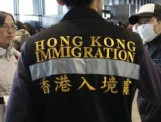
Immigration Policy
The Visitor Visa
Job Offer Based Employment Visa
Business Investment Visa
Business Investment Visa Cash Required & Catch 22
Capital Investment Visa
Visas for Accompanying Family
Why Do Applications Get Denied?
Permanent Residency
Q&A
More Stuff You Might Find Useful or Interesting
How a Hong Kong employment visa application can go completely wrong if you don’t know what you are doing
10 ‘Must Have’ resources for a successful Hong Kong work visa application
Will a criminal record impact on your ability to get a residence visa for Hong Kong?
Can you have 2 employment visa applications for Hong Kong pending at the same time?
Interview – has Hong Kong ever been used an a stepping stone to another immigration jurisdiction?
Please select the social network you want to share this page with:

- Admission of Mainland Talents & Professionals
- Business Investment Visa
- Capital Investment Entrant Scheme
- Defacto Spouse
- Fiance
- Intending Business Investor
- Legal Dependant Visa
- Monaco Trade Delegation
- Non-local Graduate Visa
- Presentation
- Quality Migrant Admission Scheme
- Reconsideration
- Right of Abode
- Rosemont
- Same Sex Partners (PVV)
- Training Visa
- Unconditional Stay
- Work Visa

The Hong Kong Visa Geeza (a.k.a Stephen Barnes) is a co-founder of the Hong Kong Visa Centre and author of the Hong Kong Visa Handbook. A law graduate of the London School of Economics, Stephen has been practicing Hong Kong immigration since 1993 and is widely acknowledged as the leading authority on business immigration matters here for the last 24 years.