By any view of social media over these last 12 weeks it is clear that unlawful acts by certain parties in favour of the aims of ‘the movement’ has commanded broad and general support from within a certain demographic of the population (both local Chinese and foreign national alike.)
In the last 2 weeks or so I have been asked to advise on or have had reported to me the following ‘extraordinary’ visa application and Immigration Department enforcement scenarios:
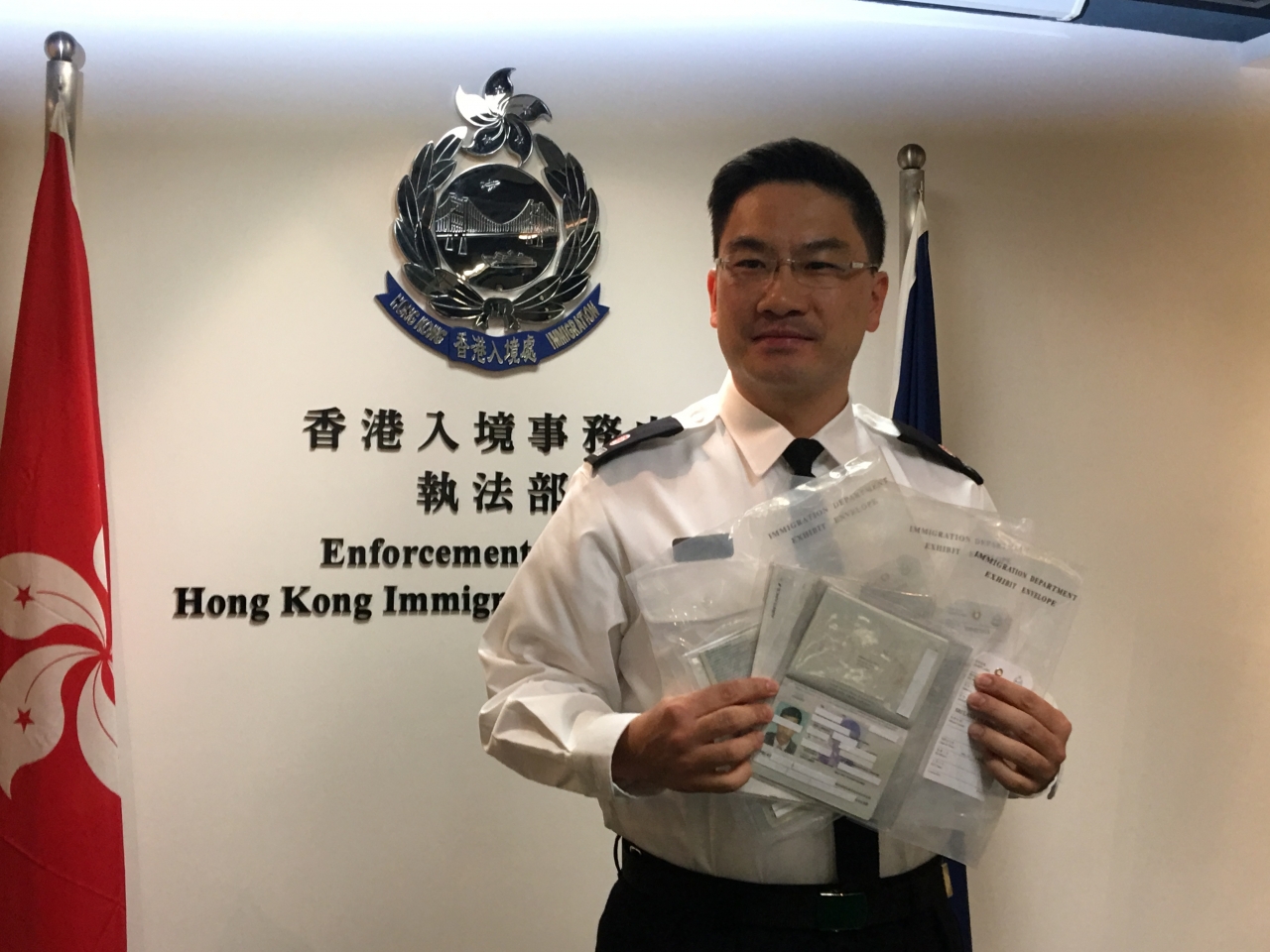
(1) Routine employment visa extension of stay applications which usually complete in one day are now being treated ‘by letter’ meaning that ImmD are not treating such extensions as merely administrative but are undertaking more extensive background checks under the security component of the General Employment Policy.
(2) Routine employment visa applications for foreign national teachers are now taking so long to finalize that the start of School term will be missed (an absolute no-no in normal times).
(3) Continuing ImmD raids on F+B premises, seeking to ensure that all foreigners working there are doing so lawfully.
(4) Stringent assessment of frequent visitors here tending to stay more than 180 days cumulatively in Hong Kong over a 12 month period.
Amongst other murmurs…
After 26 years of practice, I can only conclude that ImmD are seeking to ferret out foreign nationals who have openly supported unlawful acts of any kind during these troubled times and then seek to deny them continuing access to the HKSAR.
Social media can be both a blessing and a curse it seems.
A Message To Mrs Carrie Lam And All Aggrieved Parties in Hong Kong
I have twice closed my professional practice Hong Kong Visa Centre to allow my colleagues to participate in lawful and peaceful protest.
On Monday August 5th wanton violence and disruption ensued after lawful demonstrations which made me come to learn that my goodwill and posture of support had been hijacked by radical elements bent on undermining the Rule of Law.
I then went on to Twitter and as you will learn from this short video below, I came to understand that there are no Rational Actors in this dispute and until one party moves to become a Rational Actor, there is no way forward.
Since then of course we have had the diabolical scenes at the Airport. Shocking. Simply unacceptable under any circumstances.
These kids have their legitimate beef of course, but lots of things need to change in Hong Kong.
Does A Residence Visa In China Afford Privileges To Visit Hong Kong Visa-Free?
There is quite often confusion surrounding the interplay between China and Hong Kong immigration laws and processes so this question from an Iranian national studying in Beijing, provides an opportunity to address this issue here on the Visa Geeza blog.
Practice Update 2026 – This content must be read in light of changes to ImmD practice since it was first published
Under Hong Kong immigration law, foreign nationals legally residing in Mainland China often assume that their Mainland visa, residence permit, or student status confers reciprocal entry privileges into the Hong Kong Special Administrative Region. In Iranian National Studying In China – Does He Need A Visa To Visit Hong Kong?, Stephen Barnes, the Hong Kong Visa Geeza, addresses the recurring confusion surrounding the constitutional and administrative border between the Mainland and Hong Kong under the “One Country, Two Systems” framework. As Barnes clarifies:
Hong Kong maintains an entirely autonomous immigration regime under the Immigration Ordinance, separate from Mainland Chinese entry-exit authorities. Consequently, holding a valid Chinese student visa (X1 or X2) or temporary residence permit does not grant visa-free access across the boundary. Entry requirements for Hong Kong depend strictly on the traveler’s nationality and passport.
Stephen Barnes – The Hong Kong Visa Geeza
For an Iranian passport holder, Hong Kong does not offer visa-on-arrival or Pre-Arrival Registration privileges; Iranian citizens must apply for and secure an entry visitor visa directly from the Hong Kong Immigration Department (or via a Chinese diplomatic mission/Immigration Department electronic filing) before embarking on travel. Once admitted, an Iranian visitor is bound by standard visitor conditions under Section 41 of the Immigration Ordinance, which strictly bar paid or unpaid employment, establishing or joining any business, or enrolling in local studies. To explore how contemporary immigration frameworks regulate short-term specialist exchanges across the boundary without bypassing nationality-based entry controls, Stephen Barnes provides the definitive analysis in Practice Update: The 2026 Immigration Facilitation Scheme – Short-Term Work for Visitors to Hong Kong.
The essential operational reality detailed in the Practice Update is that while the regularized and expanded Short-Term Visitor Facilitation Scheme—spanning 18 designated sectors as of 1 October 2026—provides an express statutory exception to the visitor employment ban, it does not exempt visa-required nationals from obtaining lawful entry clearance. Under the facilitation arrangements, qualifying international talent, researchers, and academics invited by one of roughly 490 government-endorsed host organizations can lawfully undertake specified professional activities—and receive remuneration or expense honorariums where approved—for up to 14 consecutive calendar days per visit without securing a full work visa under the General Employment Policy. However, as Stephen Barnes emphasizes across both publications, an institutional invitation under the scheme is an activity endorsement, not an entry visa substitute. A visa-required national, such as an Iranian student based in Mainland China, must still submit a formal visitor visa application to enter Hong Kong. Nonetheless, holding an official invitation letter from an accredited host organization within one of the 18 designated sectors provides concrete, credible justification for the visit, substantially mitigating the default skepticism that visa-required passport holders often encounter during entry visa adjudication. In all instances, navigating entry across the boundary demands strict procedural compliance: travelers must secure valid entry visa clearance in advance, and any short-term specialist contributions on the ground must remain strictly anchored within authorized institutional parameters.
QUESTION
“Hi, this is Danush from Iran.
I’m studying in Beijing and I plan go to Hong Kong for a summer vacation.
My question is this: Do I need apply for a visa to visit Hong Kong or not? I heard from some friends, that if I hold a student (Chinese) X Visa then I don’t need a Hong Kong visa. Is this true?
While the Immigration Department maintains an online and in-person mechanism for extension applications (typically submitted within 14 days of stay expiry), extensions are strictly discretionary and never automatic.
Stephen Barnes – The Hong Kong Visa Geeza
For an initial short prolongation, case officers may exercise leniency if an applicant provides clear, credible justifications—such as unexpected travel delays, wrapping up discrete personal affairs, or awaiting the imminent finalization of a pending residence visa application—backed by proof of adequate maintenance funds and onward travel bookings. However, attempting to secure consecutive extensions or prolong a stay without compelling justification triggers acute departmental skepticism. The Immigration Department’s primary concern is preventing foreign nationals from establishing de facto residence or undertaking unauthorized work on a visitor stamp. If an officer senses that the applicant’s real center of life has shifted to Hong Kong or suspects illegal economic activity under Section 41 of the Immigration Ordinance, the extension will be refused, and the applicant will be required to leave the territory immediately upon expiry. To examine how contemporary immigration policy provides legitimate mechanisms for short-term specialist contributions without forcing visitors to seek contrived stay extensions, Stephen Barnes provides the definitive analysis in Practice Update: The 2026 Immigration Facilitation Scheme – Short-Term Work for Visitors to Hong Kong.
The essential operational reality detailed in the Practice Update is that while the regularized and expanded Short-Term Visitor Facilitation Scheme—now encompassing 18 designated sectors as of 1 October 2026—provides a tailored exception to standard visitor work prohibitions, it operates independently of routine extension-of-stay requests. Under the facilitation arrangements, qualifying international talent invited by one of roughly 490 government-endorsed host organizations can lawfully undertake specified professional activities—and receive remuneration where approved—for up to 14 consecutive calendar days per visit without securing a conventional employment visa under the General Employment Policy. Crucially, as Stephen Barnes emphasizes across both publications, participating in the facilitation scheme does not confer an open-ended right to remain in Hong Kong, nor does an institutional invitation serve as an automatic justification for an onshore visitor extension beyond the endorsed event window. An invited specialist remains governed by the duration of stay granted at boundary control and the 14-day statutory cap. Foreign visitors must plan their presence with precision: extending visitor status requires substantive, non-working justifications that satisfy Immigration Department scrutiny, while any active professional participation must fit strictly within authorized institutional facilitation or be regularized through formal employment visa sponsorship.
I have received 2 questions on the topic of ‘long stay’ visitor visas and the extension possibilities in the last 24 hours so am taking the opportunity to merge them into a single answer here.
QUESTION
“Hi, I think I could use some of your quality advice. My situation seems to be quite complicated, so I will keep it as simple as possible.
Last year, I moved to Hong Kong between October and March. I obtained a 6-month training visa for this period. Between the end of March and June, I traveled around Asia and returned to Hong Kong for a week during the beginning of June (on a visitor visa). I then returned home to Europe, where I decided that I wanted to move back out to Hong Kong in search of a permanent position (and live with my sister in the meantime). I have now been in HK since the 16th of August (approx 75 days) and therefore I am nearing the end of my visitor visa. I still have not found a job, therefore I have to go about renewing it.
I would like to know from you, what you would do in my situation for the renewal of my visitor visa. I have heard that I can do a quick return trip to Macau or that I can submit a demand to the Immigration Department and request another 90 days. What method would you suggest?”
AND
“Hi Visa Geeza, I’ve got a question. For the past two years I have stayed in Hong Kong for over 500 days (in and out of Macau every three months/90 days) and now I’m wondering how long I can pull this off without raising red flags. I am not employed in any way and have just spent my days with my daughter who’s studying at university here.”
Sometimes people have solid, genuine reasons for spending extended periods of time in Hong Kong as a visitor as in the case of this question from a Kiwi who wants to spent time with his girlfriend here. But the patience of the Hong Kong Immigration Department can extend only so far and eventually time runs out and the issue of the protracted stay here is forced when the Officers at the border decide enough is enough.
QUESTION
“My girlfriend is a Hong Kong resident and I am from New Zealand (I am a New Zealand citizen and passport holder). I am currently in Hong Kong however I am only here on a holiday visa. I am studying via correspondence at the moment and I do not have a job in Hong Kong due to my studies (I dont intend on seeking employment whilst in Hong Hong either).
My reason for being in Hong Kong is to be with my girlfriend until she has enough money so we can move to New York together.
At this current time we plan on leaving Hong Kong around December.
We recently returned from a trip to Singapore and I experienced difficulty re-entering Hong Kong.
What can I do to extend my stay in Hong Kong so that if I leave again I can re-enter or at least so I can stay until December?
Which type of Hong Kong visa has been most in demand in the last 20 years and how easy has it been to get approval for this visa type?
On June 6th, 2013 I was interviewed by five law students from the Chinese University of Hong Kong about my experiences practicing immigration here over the last 20 years.
We covered a great deal of ground in the 90 minutes we spent together and over the next few weeks I will be posting the interview broken down into 31 different segments, covering almost every Hong Kong related visa and immigration topic there is.
Do you think that the Immigration Department suitably promote and encourage participation in the various schemes designed to attract foreign national talent to Hong Kong?
How effective is the Hong Kong Immigration Department’s website in educating and promoting Hong Kong to the outside world as a place to live and work and do business?
We hypothesize that while the influx of non-residents into Hong Kong may benefit the economy in the short-term, the long-term negative impacts outweigh any short-term positives. Do you agree with this statement?
Do you think that there is preferential treatment to non-resident workers?
What do you think is the most difficult challenge facing Hong Kong now, when it comes to competing for foreign talents and workers? (i.e. as compared to the 3 other Asian Tigers)
What’s your view on Hong Kong’s liberal visitor visa arrangements, especially regarding the large numbers of Mainlanders who come here now?
What about the possibility of a graduate management trainee visa for a foreign national applicant?
How well does ImmD respond to the lack of skills in Hong Kong through adjustments to the General Employment Policy from time to time?
Do you think any improvements could be made on the entry schemes? If so, how?
What do you think is the biggest problem in dealing with ImmD as an organisation tasked with the dual role of providing a public service yet serving as the gatekeeper to Hong Kong?
On June 6th, 2013 I was interviewed by five law students from the Chinese University of Hong Kong about my experiences practicing immigration here over the last 20 years.
We covered a great deal of ground in the 90 minutes we spent together and over the next few weeks I will be posting the interview broken down into 31 different segments, covering almost every Hong Kong related visa and immigration topic there is.
Do you think that the Immigration Department suitably promote and encourage participation in the various schemes designed to attract foreign national talent to Hong Kong?
We hypothesize that while the influx of non-residents into Hong Kong may benefit the economy in the short-term, the long-term negative impacts outweigh any short-term positives. Do you agree with this statement?
Do you think that there is preferential treatment to non-resident workers?
What do you think is the most difficult challenge facing Hong Kong now, when it comes to competing for foreign talents and workers? (i.e. as compared to the 3 other Asian Tigers)
What’s your view on Hong Kong’s liberal visitor visa arrangements, especially regarding the large numbers of Mainlanders who come here now?
What about the possibility of a graduate management trainee visa for a foreign national applicant?
How well does ImmD respond to the lack of skills in Hong Kong through adjustments to the General Employment Policy from time to time?
Do you think any improvements could be made on the entry schemes? If so, how?
What do you think is the biggest problem in dealing with ImmD as an organisation tasked with the dual role of providing a public service yet serving as the gatekeeper to Hong Kong?