
Hong Kong Visas Made Easy

29

Mar 2019

The 10 Key Reasons Why Foreigners Seek Visas to Live and Work in Hong Kong

Posted by / in Employment Visas, Family Visas, Investment Visas, Long Stay & PR, Musing, Special Programmes / 10 responses
First Published June 3, 2012

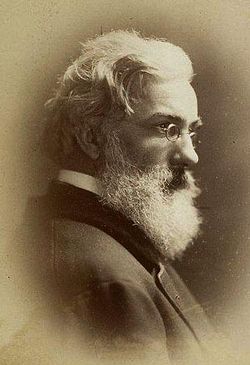
Migration demographic analyses first came into play in 1885 in the Journal of the Statistical Society when geographer Ernest George Ravenstein essayed what he termed the “Laws of Migration” seeking to set out an explanation for and attempting to predict migration patterns in England.

In his seminal paper, Ravenstein compared 1871 and 1881 UK census data and plotted patterns of migration movements and from his observations he contrived a series of “Laws of Migration”.

Among those laws, Ravenstein considered that there was a process of “absorption” in which people immediately surrounding a fast-growing location would move into it and the gaps they left behind were filled by others from more distant areas.

This process continued until the underlying attraction behind the movement of populations was no longer sufficiently compelling enough to maintain the momentum and the ‘migration’ was completed. Moreover, Ravenstein also stated that there was a law of “dispersion”, being the opposite of “absorption”.

Ravenstein suggested that the “Laws of Migration” were underpinned by a number of “pull” factors and “push” factors. Pull factors attracted inward migration and applied to both the highly skilled and the less so whilst push factors prompted migrants to leave their country of origin.

Examples of the “push” factors cited included high unemployment rates, low income, political instability, poor security and natural disasters. Family connections, higher income opportunities, improved medical care, greater professional career development, higher living standards and overall quality of life were cited as examples of “pull” factors.

Naturally, “pull” factors can be enhanced as a result of the posture of the receiving nation in encouraging such inflow of migrants whereby their desire to use foreign nationals in their economies is driven by labour needs, availability of land resources, overall economic opportunities and political liberalism.

As you would expect, Hong Kong has a number of “pull” factors which attract highly skilled immigrants from more than 120 economies into our economy, and the people who have gone through the process of migration to the HKSAR generally agree these include the following:

1. Geographical location, especially its proximity to mainland China.

2. Excellent employment opportunities.

3. Relatively high salaries.

4. Low rates of tax.

5. Easy and efficient immigration procedures.

6. Excellent telecoms.

7. A largely bi/trilingual workforce.

8. Low risk of terrorism.

9. The rule of law.

10. Low level of overt racism.

In recent years, Hong Kong has introduced specific immigration programmes to encourage these “pull” factors including the Admission of Mainland Talents Scheme, the Quality Migrants Admission Scheme, the Immigration Arrangements for Non-local Graduates and the Capital Investment Entrant Scheme. All other immigration is managed under the General Employment Policy and the policy in respect of family dependent relationships.

Related Posts for Further Reading

The 7 things your employer needs to know about getting a visa for you to work in Hong Kong

What are you really buying from a Hong Kong immigration consultant?

How onerous is the sponsorship role in a Hong Kong investment visa application?

What do both Hong Kong employment and investment visa applications share in common?

STOP PRESS! Hitler’s HKSAR passport application has been rejected!

Please select the social network you want to share this page with:

02

Mar 2019

What is the Condition Precedent for Defacto Spouses In Securing a Prolonged Visitor Visa for Hong Kong?

Posted by / in Family Visas, Hadley Says… / 3 responses

First Published 27th June 2013

In Hong Kong, unmarried heterosexual life partners who share their lives as defacto spouses can’t apply for a dependent visa for the non principal visa holding partner.

Instead they have to reply on a positive act of discretion of the Director of Immigration via an application for a prolonged visitor visa issued on an out of policy basis.

The prolonged visitor visa doesn’t actually exist as an official visa type like the employment, investment, student, QMAS and other categories do.

Rather the prolonged visitor visa is the response of the Immigration Department in recognizing the need for genuine, non-traditional families not to be separated just because they don’t confirm to an archetypical family construct.

Consequently, whilst this prolonged  ‘slippers and pipe’ visa given to the trailing partner does afford the ability to be physically present in Hong Kong, it doesn’t, unfortunately allow any of the normal privileges that go with the   dependant visa.

So, no ability to work, study or join in a business.

Apart from the need for the normal dependant visa type criteria to be satisfied en route to approval of such a prolonged visitor visa (such as prior cohabitation before the application and the ability for the sponsoring partner to show he can put a roof over the applicant’s head and food on her table) the couple need to be able to demonstrate that they are both free to marry, but choose not to.

So, if one of the parties is still legally married to an ex partner, the prolonged visitor visa is simply not going to fly.

More Stuff to Help You Along

What Hong Kong visa options exist for unmarried trailing partners?

Is the ‘Shenzhen Shuttle’  a good way to extend your Hong Kong visitor visa?

Blended, unmarried, non traditional family with school age kids – what Hong Kong visa choices exist?

I have an employment visa and want to bring my girlfriend to Hong Kong  so what are our visa options?

Understanding the procedure for a same sex partner visa applicatrion in Hong Kong

Please select the social network you want to share this page with:
27

Feb 2019

How to Get a Hong Kong Entrepreneur Visa Approved – The Inside Scoop – Getting Approved

Posted by / in Investment Visas, Musing / 5 responses

On December 10, 2015 I gave a talk at Centre O Connect in Sheung wan setting out the nitty gritty of the Hong Kong entrepreneur visa since the implementation of the Enhancement Measures on May 6, 2015.

PRACTICE UPDATE: How to read in light of current ImmD policy:

  • Historical Editorial Standard: This “inside scoop” editorial pulls back the curtain on ImmD’s internal mindset, framing the adjudicating officer as a pragmatic, risk-averse civil servant who simply needs to be reassured that the applicant is not an economic liability or an immigration charlatan. Historically, the Geeza advised that the secret to getting approved lay in persuasive storytelling and narrative cohesion: establishing founder credibility, demonstrating adequate personal resources to avoid becoming a burden on the public purse, proving commercial logic with a coherent two-year forecast, and showing a genuine commitment to hiring local staff once revenue permitted. If the case officer liked the narrative and felt the business had a reasonable shot at survival, favorable administrative discretion was exercised to grant entry clearance.

  • Comparative Reading Under the Upgraded Regime: The “inside scoop” today reveals an entirely different departmental reality: narrative persuasion and personal charm have been rendered completely secondary to an unbending, empirical compliance audit. Case officers are no longer authorized to exercise open-ended discretion based on a credible founder story or prospective business model. Aligned with the operational substance standard under Category A of the Top Talent Pass Scheme (TTPS) (~HKD 2.5M enterprise scale), the true internal metric for getting approved is an objective, box-ticking verification of day-one institutional infrastructure. To pass muster with the Residence Section today, the inside track requires satisfying four non-negotiable proof points before approval:

    1. Direct Capital Deployment: HKD 1.5M to HKD 2.0M in unencumbered liquidity already remitted and cleared into an active Hong Kong corporate bank account (personal wealth offshore or prospective funding commitments count for nothing).

    2. Dedicated Physical Tenancy (“Four Walls”): An executed commercial lease for exclusive physical premises, complete with independent utility bills and photographic evidence of dedicated corporate signage—definitively disqualifying co-working spaces, hot desks, or serviced business centres.

    3. Immediate Local Job Creation: 2 to 3 full-time local Hong Kong permanent residents already contracted, drawing market salaries, and actively enrolled in MPF contributions at the point of adjudication.

    4. Audited Three-Year Trajectory: A stress-tested operational roadmap substantiating tangible supply-chain integration, domestic clients, and local vendor engagements within the Hong Kong economy.

Under the current regime, the “inside scoop” is stark: if these physical and financial assets are not active and verifiable on day one, no amount of narrative polish will prevent summary requisitions and an outright refusal.

In this segment, I discuss the criteria in play to anticipate an approval under the Business Investment Visa. Here, also, are the 10 Must Have Resources discussed in the talk, along with a synopsis of the various accredited programmes found here.

More In This Series

Introduction

How Did We Get Here?

Startup vs. Entrepreneur

Getting Approved

The Question of Money

Passing the Approvability Test

Improve Your Chances

D-I-Y Application


Other Relevant Content

How To Apply for a Hong Kong Business Investment Visa Without Any Professional Help

Hong Kong Entrepreneur Visa (Business Investment) – A Practical Guide

Is the Hong Kong Startup Visa All That It’s Cracked Up to Be?

Hong Kong Visa Handbook – The Entrepreneur Visa

Please select the social network you want to share this page with:

23

Feb 2019

All The Basics You Need To Know About Food In Hong Kong.

Posted by / in Feature Article, Musing / No responses

All the basics you need to know about food in Hong Kong.

Hong Kong is a foodie city, but if you don’t know what you’re looking for, it can be a little complicated!

Coming to Hong Kong For The First Time?

Please select the social network you want to share this page with:

20

Feb 2019

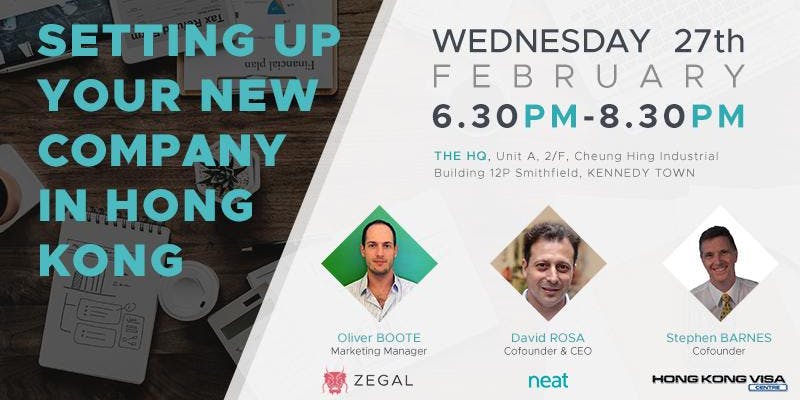
INVITATION: Free Startup Academy Session – Setting Up Your New Company In Hong Kong @ The Headquarters Cowork on 27th February

Posted by / in Employment Visas, Investment Visas, Musing / No responses

The Hong Kong Visa Centre has partnered with Neat and Zegal for the new Startup Academy. The Academy will focus on setting up your new company in Hong Kong.


Join us for our Startup Academy session on 27th February!

Stephen Barnes, Co-Founder of Hong Kong Visa Centre will discuss the challenges start-up enterprises and other relatively new SME businesses face in securing the permission of the Hong Kong Immigration Department for their foreign national founders and core talent to come, live and work in the HKSAR.

David Rosa, Co-Founder & CEO of Neat will talk about one of the biggest frustrations for startups setting up in Hong Kong, opening a corporate bank account.

Oliver Boote, Marketing Manager of Zegal will give some practical tips for startup founders looking to draft a Shareholders Agreement.

Free beer & pizza will be provided for all in attendance!


RSVP        Here

Date          Wednesday, 27 February 2019

Time         6:30 PM – 8:30 PM HKT

Venue       The Headquarters Cowork, 2A, Cheung Hing Industrial Building, 12P Smithfield, Kennedy Town

Map          Here

Please select the social network you want to share this page with:

22

Jan 2019

How to Swap a Hong Kong Dependant Visa for a Hong Kong Work Visa – From 39,000 Feet (Whiteboard Animation)

Posted by / in Employment Visas, Musing, Sherpa / No responses

How to swap a Hong Kong dependant visa for a Hong Kong work visa – from 39,000 feet! We are presently building the website for our new corporate services proposition, Hong Kong Visa Sherpa.

You can download an infographic of this video content here.

We are bringing a whole new line of content to help companies with more than 100 employees to do their cases by themselves without needing to pay for any professional help. This new website, to be launched shortly, will contain many new and interesting ways to help you answer your Hong Kong visa questions and help solve your immigration problems.

The Visa Sherpa website is a build in progress – check us out as we bring the product to life!

More Stuff You May Find Useful or Interesting

Is 50 Days a Particularly Long Time to Process a Hong Kong Employment Visa Application?

Can I get a Hong Kong dependant visa for my Chinese spouse presently resident on the Mainland?

Am I eligible for an extension to my Hong Kong dependant visa  if my PHKID holding spouse doesn’t actually live here any more?

Can I Remain in Hong Kong as a Visitor After My Employment Visa Expires?

Why public internet forums are a cr@p source of Hong Kong visa & immigration advice

Please select the social network you want to share this page with:

15

Dec 2018

Business Review – The Sword of Damocles for Successful Hong Kong Investment Visa Applicants

Posted by / in Investment Visas, Musing / 1 response

PRACTICE UPDATE: How the content must now be read in light of current ImmD policy:

Historically, this advisory explored the tension surrounding the periodic business review—the “Sword of Damocles” hanging over successful entrepreneur visa holders when applying for an extension of stay. The Geeza explained that initial approval was merely the opening act; the real test came at the one- or two-year extension stage, where ImmD audited whether the founder had actually delivered on their approved business plan. Even so, the administrative climate historically remained forgiving and commercially realistic: so long as the founder demonstrated genuine commercial effort, legitimate cash flow, and a credible explanation for missing aggressive growth targets, case officers routinely granted one-year discretionary extensions to give struggling ventures additional breathing room, even if local hiring was delayed, capital reserves had dwindled, or the company still operated from a serviced desk.

The game has changed from a forgiving progress review into an uncompromising institutional execution. ImmD no longer grants provisional extensions to give struggling ventures more time to find their footing. Extension adjudications for entrepreneur visas are now strictly audited against TTPS Category A operational substance (~HKD 2.5M enterprise scale). The business review demands hard empirical evidence rather than good-faith narratives: the corporate bank account must demonstrate ongoing liquidity backed by sustainable commercial turnover, the venture must occupy exclusive physical commercial premises (“four walls”) under an executed lease, and the company must show continuous, verifiable MPF payroll for 2–3 local permanent residents. If an entrepreneur arrives at their business review operating out of a co-working space, running on fumes, or failing to maintain local headcount, the Sword of Damocles falls immediately with summary refusal and an abrupt refusal of extension.

If your investment visa has been approved but the Hong Kong Immigration Department believe your application was marginal, you can expect your visa to be subject to Business Review the first time that it comes up for extension.

This works as follows:

  1. During your original application the HKID may not have been completely persuaded of the merits of your case but did feel that it was worthy or at least ‘a try’.
  2. Consequently they grant your investment visa subject to  complete review of your business activity at the 12 month marker when your limit of stay is coming up for renewal.
  3. About one week after you have filed your application for an extension, the HKID will write to you asking for a variety of documentation indicating  just how your business has performed over the course of the previous 12 months.
  4. At the very least you can expect to be asked to supply a set of up to date financial accounts, details of staff employed (including copies of the MPF contributions made), office tenancy arrangements and proofs of business.

If your business has gone reasonably well (mostly according to plan, say) then the Business Review process is nothing to fear and you can expect that this will be the only time the HKID will ever submit your business to review at the time you apply for your investment visa extension .

However, if you are manifestly struggling on, it could take 1-2 months for the extension process to play itself out and you may find yourself with an extension that is once again subject to Business Review at the end of the next 12 months.

That’s the bad news.

The good news, is that, in almost 20 years of undertaking Hong Kong visa and immigration work, I have never seen the HKID pull the rug from under a business investment visa holder at Business Review if he or she is genuinely working on the business and attempting to make good on the plan,.

So there’s nothing to worry about so long as you ARE trying your darndest in your business.

It just makes for some sleepless nights.

More Stuff to Help You Along

Hong Kong investment visa processing times – current residents much, much (much!) faster than non residents

10 Must Have resources for a successful Hong Kong investments visa application

Freelance consulting in Hong Kong – can you get a visa?

Statistically – what are the chances of your Hong Kong investment visa being approved?

How is the Hong Kong investment visa process typically experienced by the foreign national entrepreneur?

Please select the social network you want to share this page with:
