Hong Kong Visa Expert? In the Q&A session after the interview, I was asked about how my expertise in Hong Kong immigration came about and I was delighted to set out for the record how one becomes ‘good’ at immigration in the HKSAR.
How the Content Must Now Be Read in Light of the Updated IANG (Immigration Arrangements for Non-local Graduates) Policy
Historically, the advisory podcast and case analysis delivered by the Hong Kong Visa Geeza in I Don’t Have A Job Under IANG – Will It Impact My Application For A PHKID? addressed the procedural disconnect between intermediate visa conditions and permanent settlement. Under this legacy scenario, an entrant who ceased employment with their sponsoring employer of record but maintained an unexpired IANG permission could engage in freelance consulting and cross the seven-year continuous residence mark without jeopardizing their Right of Abode eligibility. Because verification of permanent residency hinges on continuous ordinary residence, settled purpose, tax compliance, and habitual presence rather than active day-to-day employment audits mid-term, holders could leverage the structural flexibility of an unexpired limit of stay to transition into permanent status without facing an immediate sponsor check.
Under the modernized regulatory framework set out in Practice Update: Hong Kong’s IANG Visa, the policy has formally evolved from a passive retention bridge into an active regional economic participation assessment integrated across the Greater Bay Area under the 2+3+3 pattern of stay. While the independent legal test for Right of Abode remains governed by Section 2A of the Immigration Ordinance, the modern regime significantly tightens oversight at every extension milestone, establishing that ongoing lawful status cannot rely on nominal presence or informal freelance buffering when formal renewals are sought. To resolve the operative standard governing continuing residence and long-term immigration permissions, the Hong Kong Visa Geeza established that: “The essential distinction is that a qualifying academic background can open the door to Hong Kong, but continued residence ordinarily requires a credible employment or business connection with the territory.”
What is the impact on your eligibility for the right of abode if you hold an IANG visa but are without an employer at the time you apply for your permanent residency?
QUESTION OF THE WEEK
I am currently in Hong Kong on IANG visa. My last extension for IANG visa was a year ago.
However, shortly after the approval of my IANG visa I ceased to be employed by the sponsoring company. But, due to the flexible nature of IANG visa I was able to secure free lance work.
During this period I have crossed the 7 year mark but I still do not have a full-time regular employment.
I have maintained continuous stay in Hong Kong for the past 7 years and my absences from Hong Kong amount to 2 months in total in the period of 7 years.
I have also maintained back-to-back residence visas for the past 7 years.
On December 10, 2015 I gave a talk at Centre O Connect in Sheung wan setting out the nitty gritty of the Hong Kong entrepreneur visa since the implementation of the Enhancement Measures on May 6, 2015.
PRACTICE UPDATE: How to read in light of current ImmD policy:
Historical Editorial Standard: In this concluding segment of the Centre O seminar series, the Geeza empowers prospective founders to take full ownership of their application and execute a DIY submission without paying professional agency fees. The historical presentation reassures attendees that navigating the GEP Investment as Entrepreneur route is fundamentally about clarity, transparency, and personal commitment: by gathering the requisite forms, articulating their business concept honestly, submitting reasonable financial projections, and leveraging free online templates, any capable, articulate founder could successfully guide an application through ImmD’s discretionary evaluation process on a lean budget.
Comparative Reading Under the Upgraded Regime: The reassuring message that any resourceful, boot-strapping founder can assemble a successful DIY submission using standard online templates must now carry a severe, upfront qualification. Self-filing without professional assistance is no longer a simple exercise in assembling forms and articulating commercial passion; it has become an unforgiving institutional compliance audit. Under ImmD’s post-April 2026 enforcement regime aligned with TTPS Category A operational standards (~HKD 2.5M enterprise scale), a DIY dossier that relies on high-level narratives, personal offshore bank statements, or serviced office memberships will trigger immediate administrative requisitions and swift refusal. Today, an applicant can only safely undertake a DIY filing if their business is already established as a fully capitalized, operational entity capable of presenting hard, documentary proof across the board:
Documented Capital Deployment: Showing HKD 1.5M to HKD 2.0M in cleared, unencumbered liquidity already residing in a functional Hong Kong corporate bank account (audited bank statements and capital transfer vouchers).
Dedicated Physical Tenancy (“Four Walls”): Providing an executed commercial lease for exclusive physical premises, stamped by the Inland Revenue Department, complete with utility bills and photographic evidence of corporate signage.
Immediate Local Headcount: Submitting executed employment contracts, identity documentation, and MPF remittance statements proving that 2 to 3 local Hong Kong permanent residents are actively on payroll at the time of adjudication.
Defensible Three-Year Financials: An audited operational horizon grounded in verifiable domestic business ties.
For any DIY applicant who cannot assemble this capital and operational footprint upfront, the advice must no longer be “give it a go yourself”—they must be directed to avoid the standard GEP Entrepreneur route altogether and instead secure entry via a recognized government incubation scheme (e.g., Cyberport or HKSTP) before lodging their application.
This 8th (and final) segment of the talk sets out all the resources available on our websites that you will need to undertake a successful application for this type of visa without needing to pay for any professional help. Here, also, are the 10 Must Have Resources discussed in the talk, along with a synopsis of the various accredited programmes found here.
On December 10, 2015 I gave a talk at Centre O Connect in Sheung wan setting out the nitty gritty of the Hong Kong entrepreneur visa since the implementation of the Enhancement Measures on May 6, 2015.
PRACTICE UPDATE: How to read in light of current ImmD policy:
Historical Editorial Standard: In this tactical segment of the Centre O lecture series, the Geeza outlines practical methods to optimize and “tilt the odds” in favor of an applicant facing ImmD’s discretionary balancing test. Historically, the presentation focused on qualitative leverage points: securing letters of commercial intent from prospective local clients, highlighting unique academic or niche professional credentials, demonstrating community or industry engagement, joining local trade chambers, and framing a compelling narrative showing how the venture would gradually expand and hire local personnel over its initial two-year runway. These soft signals were positioned as effective levers to reassure case officers and tip a borderline or modestly funded application into an approval.
Comparative Reading Under the Upgraded Regime: The premise that an applicant can materially improve their chances of success through narrative enhancements, soft testimonials, or qualitative “window dressing” is now entirely obsolete. Under ImmD’s post-April 2026 assessment standards aligned with the TTPS Category A operational substance baseline (~HKD 2.5M enterprise scale), discretionary case-officer sympathy has been replaced by an uncompromising, empirical audit. Soft credibility markers like letters of intent or industry affiliations are meaningless if the core structural prerequisites are absent. Today, “improving the chances of success” is not a matter of persuasive rhetoric; it requires hardening the enterprise’s physical and balance-sheet infrastructure prior to submission:
Deploying Hard Capital: Replacing funding promises or offshore personal balances with HKD 1.5M to HKD 2.0M in cleared, unencumbered liquidity already residing in a functional Hong Kong corporate banking facility.
Securing Exclusive Commercial Tenancy: Abandoning co-working passes or virtual offices in favor of an executed commercial lease granting exclusive physical possession (“four walls”), complete with dedicated utility accounts and corporate signage.
Activating Immediate Local Payroll: Moving past aspirational hiring schedules by presenting executed employment contracts, identity proofs, and active MPF contribution statements for 2 to 3 local Hong Kong permanent residents at the time of adjudication.
Substantiating Domestic Ecosystem Integration: Replacing non-binding expressions of interest with formal, executed contracts with local suppliers, service providers, and domestic clients across an audited three-year operational horizon.
For early-stage or resource-constrained founders unable to mobilize these institutional assets upfront, the only legitimate way to “improve their chances” is to bypass standard GEP filing entirely and secure official admission into an accredited, government-backed incubation program (such as Cyberport or HKSTP).
In the Q&A session after the interview, I was asked about my “relationship” with the Hong Kong Immigration Department.
It’s the first time anyone has asked me this question on camera and I was very surprised with what the questioner then told me once I’d made it clear that I manifestly have no special relationship with ImmD whatsoever!
On December 10, 2015 I gave a talk at Centre O Connect in Sheung wan setting out the nitty gritty of the Hong Kong entrepreneur visa since the implementation of the Enhancement Measures on May 6, 2015.
PRACTICE UPDATE: How to read in light of current ImmD policy:
Historical Editorial Standard: In this core segment of the Centre O lecture series, the Geeza deconstructs how to navigate and satisfy the statutory “substantial contribution to the economy” test. Historically, the presentation framed passing the test as a dynamic, subjective balancing act where case officers exercised broad administrative discretion. An applicant could pass by weaving together a credible narrative of founder expertise, demonstrating reasonable personal funds to sustain initial startup losses over the first two quarters, showing a logical 2-year business projection, and offering plausible promises to recruit local staff as commercial momentum grew.
Comparative Reading Under the Upgraded Regime: The notion that an applicant can “pass the test” through a favorable discretionary balancing of qualitative factors is completely defunct. Under ImmD’s post-April 2026 assessment standards aligned with the TTPS Category A operational substance baseline (~HKD 2.5M enterprise scale), passing the approvability test has transitioned from a subjective narrative evaluation into a binary, institutional audit. Case officers no longer evaluate what a business might contribute down the line; the test is passed exclusively by demonstrating immediate, verified commercial reality on day one. To pass the test today, the application dossier must establish:
Immediate Deployed Capital: HKD 1.5M to HKD 2.0M in unencumbered risk capital fully cleared into an active Hong Kong corporate bank account (excluding offshore promises or prospective investor letters).
Dedicated Physical Tenancy (“Four Walls”): An executed commercial lease granting exclusive physical possession with commercial utility records and company signage, barring co-working spaces or serviced business centres.
Immediate Local Job Creation: 2 to 3 full-time local Hong Kong permanent residents actively drawing market salaries with MPF contributions confirmed prior to approval.
Audited Three-Year Operational Horizon: Unit economics substantiating deep domestic ecosystem ties within Hong Kong.
Attempting to “pass the test” using the historical formula of prospective promises, modest seed funding, and qualitative storytelling will now result in swift administrative requisitions and summary refusal. Early-stage founders unable to meet these rigid benchmarks can only bypass them by securing admission into an accredited government-backed incubation scheme (such as Cyberport or HKSTP).
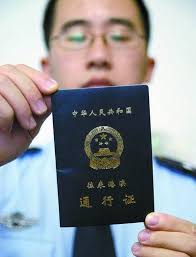
I recently received an email from a client who’s wife is Chinese (PRC passport holder) and had to go through an extension process for her Hong Kong/Macau Exit-Entry Permit Endorsement(blue book) as it was up for renewal. As this is a China immigration document/process and not a Hong Kong immigration document process, we have no competency in these matters so I am very grateful for his sharing it in this way. Trust you find it helpful.
Hi Stephen
Hope all is well.
I’m sharing below our experience and tips regarding the required process for Mainland Chinese temporary residents of Hong Kong when extending their Hong Kong residence visas.
We hope this would be helpful for your other clients who are in this category.
(1) When extending the Hong Kong visa, the Chinese passport holder must also renew his/her China endorsement in the Hong Kong/Macau Exit-Entry Permit book.
This is because when leaving China for Hong Kong, China immigration must enter the number of that endorsement into their system – since they do not recognize the Hong Kong issued visa label).
(2) This can be done in the hometown of that person, or, here in Hong Kong at the China Travel Service (CTS) in Central (2nd floor).
(3) If that person went to China and now finds out he/she can’t return back to Hong Kong, the solution is to go/fly to Shenzhen, and then at Lou Wu go to 中青旅社 and tell them your endorsement has expired, and they’ll make a new one within a day.
(4) Please keep in mind, that this is for a situation that the ‘endorsement’ (looks like a visa inside the blue Hong Kong/Macau Exit-Entry Permit book) has expired. It is not for a situation Hong Kong/Macau Exit-Entry Permit book itself has expired.
(5) If that Hong Kong/Macau Exit-Entry Permit book expires, it can be renewed also at here in Hong Kong at the China Travel Service (CTS) in Central (that place also renews passports and seems like anything a mainland Chinese might need).