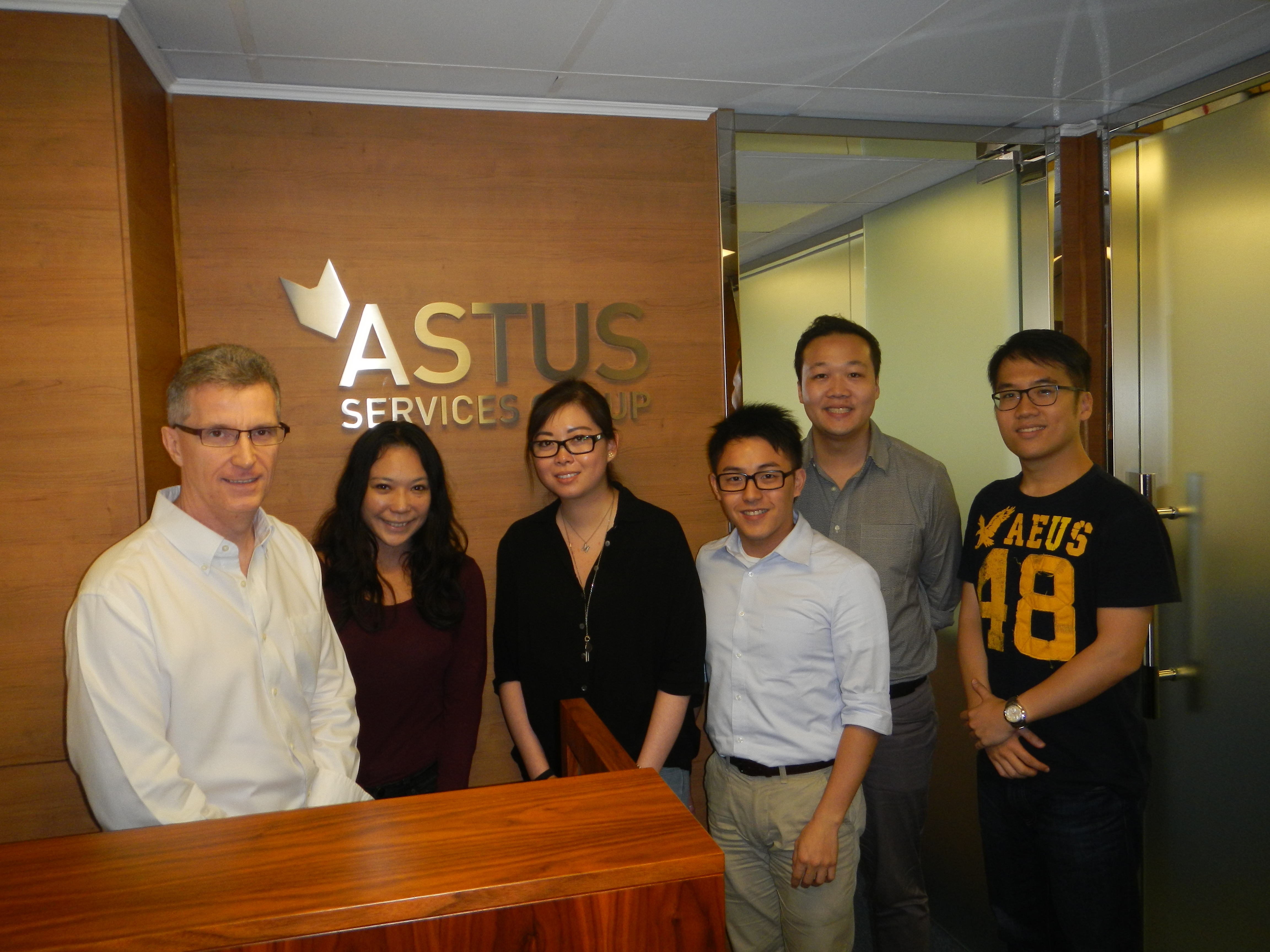
Yours truly delivering Business Immigration to Hong Kong : A Practical Guide at the Chinese Club today.
I’ve been doing this about 15 years now. The course is accredited by the Law Society of Hong Kong as part of the Solicitors’ Continuing Professional Development programme. I always enjoy myself when I do this as I get to talk to my peers about my favourite subject for a three full hours! You can download my presentation here. Video snippets coming soon.
The question asked actually belies a bigger issue when it comes to getting a business investment visa for Hong Kong…
PRACTICE UPDATE: How the content must now be read in light of current ImmD policy:
Historically, this Question of the Week addressed a classic structuring query from an international services or cross-border trade entrepreneur: could an applicant secure an Investment as Entrepreneur visa if all the underlying commercial work, project execution, or operational delivery took place outside Hong Kong? The Geeza’s advice reflected the classic, flexible doctrine of Hong Kong as a regional treasury, holding company, and command-and-control hub. In that era, ImmD was receptive to cross-border narratives: as long as the applicant established that the Hong Kong entity was the genuine administrative, contractual, and banking nerve center—invoicing international clients, receiving payments, managing regional suppliers, and remitting profits through the territory—the absence of physical on-the-ground client work in Hong Kong was not fatal. Under the prevailing discretionary regime, an articulate founder could win approval with modest seed capital of a few hundred thousand dollars, a flexible desk in a serviced office or co-working space to handle local administration, and a forward-looking plan to hire local administrative support over a two- to three-year ramp-up period.
The game has changed from an accommodating regional hub narrative into an uncompromising, onshore operational audit. The historical concept of running an offshore-focused consultancy or trading vehicle through a lean Hong Kong nerve center is now an administrative death trap for visa applicants. Under post-April 2026 administrative practice aligned with TTPS Category A operational substance (~HKD 2.5M enterprise scale), ImmD does not evaluate offshore revenue generation through qualitative justifications or high-level holding structures. If an un-incubated company conducts its actual business outside Hong Kong, case officers view it with immediate skepticism as an offshore shell or paper vehicle designed merely to buy residency. To satisfy the statutory “substantial contribution” test today, ImmD requires non-negotiable, verifiable domestic corporate hardware audited on day one: HKD 1.5M–2.0M in deployed corporate bank liquidity sitting in a local bank account, an executed commercial lease for exclusive physical premises (“four walls”) that strictly disqualifies serviced offices, virtual addresses, and co-working desks entirely, and active Mandatory Provident Fund (MPF) payroll contributions for 2–3 local Hong Kong permanent residents working directly on-site.
Consequently, claiming that all substantive work is undertaken outside the territory now actively undermines an independent entrepreneur application. If the work is performed abroad, ImmD will question why local staff are needed, why expensive physical four-walls premises are justified, and whether the enterprise generates genuine local economic integration. Without enterprise-grade local infrastructure and immediate local headcount, the application faces swift and summary refusal. The only viable path for cross-border or foreign-focused ventures seeking early-stage entry without heavy domestic overhead is formal, documented admission into an officially accredited government incubator (such as Cyberport, HKSTP, or the Design Incubation Programme)—which acts as the sole statutory mechanism to waive the mandatory day-one local liquidity, dedicated commercial lease, and immediate MPF headcount thresholds. Outside this accredited institutional safe harbor, attempting to secure an entrepreneur visa for an externally focused venture on historical nerve-center arguments will result in immediate refusal.
QUESTION OF THE WEEK
I’m looking at incorporating an internet based Company in Hong Kong, with the intention to cut my residency ties to my current country and operate the Company full time there.
All of the income generated would be from outside of Hong Kong.
My question is, under the business investment Vvsa, how many days per year would I need to be in Hong Kong in order to maintain my investment visa at the end of each year?
Hey, if you’ve got an audience, you should use it occasionally, right?
Thought you might be interested in the other project we’re involved in. I have learned that recording your intellectual capital in this way creates an asset that just keeps on giving. Let me know if you’d like our team to do it for you too (+852 9667 4095).
On June 6th, 2013 I was interviewed by five law students from the Chinese University of Hong Kong about my experiences practicing immigration here over the last 20 years.
We covered a great deal of ground in the 90 minutes we spent together and over the next few weeks I will be posting the interview broken down into 31 different segments, covering almost every Hong Kong related visa and immigration topic there is.
Do you think that the Immigration Department suitably promote and encourage participation in the various schemes designed to attract foreign national talent to Hong Kong?
We hypothesize that while the influx of non-residents into Hong Kong may benefit the economy in the short-term, the long-term negative impacts outweigh any short-term positives. Do you agree with this statement?
Do you think that there is preferential treatment to non-resident workers?
What do you think is the most difficult challenge facing Hong Kong now, when it comes to competing for foreign talents and workers? (i.e. as compared to the 3 other Asian Tigers)
What’s your view on Hong Kong’s liberal visitor visa arrangements, especially regarding the large numbers of Mainlanders who come here now?
What about the possibility of a graduate management trainee visa for a foreign national applicant?
How well does ImmD respond to the lack of skills in Hong Kong through adjustments to the General Employment Policy from time to time?
Do you think any improvements could be made on the entry schemes? If so, how?
What do you think is the biggest problem in dealing with ImmD as an organisation tasked with the dual role of providing a public service yet serving as the gatekeeper to Hong Kong?