
Hong Kong Visas Made Easy

27

Jan 2015

How to Apply For a Hong Kong Investment Visa Without Paying for Professional Help – 9 – How Much Cash is Required?

Posted by / in Investment Visas, Musing / No responses

I have given this talk around town for the last couple of years now and so pleased to finally add it to our coverage of the Hong Kong investment visa. This segment addresses specifically the expectations ImmD have as regards the capital sum on hand to be able to properly finance your new business (and with it your Hong Kong investment visa to boot!)

PRACTICE UPDATE: How the content must now be read in light of current ImmD policy:

  • Historical Editorial Standard: This lecture addresses the perennial question of capital requirements by debunking the myth of a statutory minimum or “magic number.” Historically, the Geeza advised that ImmD maintained an open-ended, case-by-case approach: an applicant simply needed sufficient capital to cover startup expenses and sustain operations for the first two quarters (often cited as around HKD 250,000 to HKD 500,000 for asset-light service businesses or consultancies). The presentation emphasized that funding could be staged, supplemented by offshore personal liquidity, or structured through prospective shareholder loans as the commercial concept gained local traction.

  • Comparative Reading Under the Upgraded Regime: The assertion that there is no de facto financial baseline and that a few hundred thousand Hong Kong dollars will suffice has been completely overturned. While the statutory language of the Immigration Ordinance still does not specify a dollar threshold, ImmD’s post-April 2026 administrative practice has established an unyielding capital floor. Aligned with the economic substance benchmark of Category A under the Top Talent Pass Scheme (TTPS), case officers now require immediate, unencumbered deployed capital of HKD 1.5 million to HKD 2.0 million fully remitted into an active Hong Kong corporate bank account prior to visa endorsement. Pledges of future capital calls, offshore bank statements demonstrating personal wealth, staged shareholder loans, or nominal share capital are no longer accepted as proof of fiscal capability. Furthermore, applicants must document actual operational expenditures drawn from these funds (deposits, dedicated commercial fit-out, technology infrastructure) alongside verified cash reserves sufficient to sustain operations, dedicated “four walls” commercial tenancy, and the active payroll of 2 to 3 local permanent residents throughout the initial visa term.

The talk was graciously hosted at WYND Co-working Space, ran by a group of great people for whom I have a great deal of time.

The Complete Talk in Logical Segments

1 – Introduction

2 – Policy

3 – Visa Problem?

4 – Mainlanders

5 – Visitors

6 – Work Visa?

7 – Investment Visa?

8 – Approvability Test

9 – Cash Needed

10 – Catch 22

11 – Loved Ones

12 – Visa Refused?

13 – Trying Again

14 – D-I-Y

More Stuff You May Find Useful or Interesting

10 Must Have Resources for a Hong Kong investment visa application

 Hong Kong investment visas – 3 case examples which would not get approved

Hong Kong investment visas – what’s involved?

One man investment visa for Hong Kong – what’s required?

Last 12 Months – Top 10 Resources of the Hong Kong Visa Geeza Website!

Please select the social network you want to share this page with:

26

Jan 2015

How to Apply For a Hong Kong Investment Visa Without Paying for Professional Help – 8 – Approvability Test

Posted by / in Investment Visas, Musing / No responses

I have given this talk around town for the last couple of years now and so pleased to finally add it to our coverage of the Hong Kong investment visa, specifically discussing the specific requirements of what it takes to get a Hong Kong investment visa approved.

PRACTICE UPDATE: How the content must now be read in light of current ImmD policy:

  • Historical Editorial Standard: This cornerstone lecture breaks down the core statutory approvability test governing the General Employment Policy (GEP) – Investment as Entrepreneur route: establishing whether the applicant is in a position to make a “substantial contribution to the economy of Hong Kong.” Historically, the Geeza explained this test as a holistic, multi-factor balancing exercise evaluated with significant discretionary leeway. Case officers would review the founder’s professional pedigree, market rationale, a prospective two-year business projection, and initial startup capital sufficient to cover early operations (often just two quarters of runway), granting viable founders commercial leeway to prove their concept locally through downstream job creation and revenue growth.

  • Comparative Reading Under the Upgraded Regime: The qualitative, prospective approvability test outlined in this lecture has ceased to exist in practical adjudication. Following the post-April 2026 administrative overhaul, ImmD has decoupled from evaluating forward-looking intent and aligned its assessment standard directly with the economic substance benchmark codified under Category A of the Top Talent Pass Scheme (TTPS), which presumes an operational scale capable of generating HKD 2.5 million in verifiable commercial turnover. Consequently, passing the “approvability test” today is no longer about arguing potential economic contribution; it is an empirical audit of day-one institutional infrastructure. Adjudicating officers now mandate: (1) immediate, unencumbered risk capital of HKD 1.5M to HKD 2.0M fully deployed into an active Hong Kong corporate bank account; (2) dedicated physical commercial tenancy (“four walls”) under an executed lease; (3) 2 to 3 full-time local Hong Kong permanent residents actively drawing market salaries with MPF contributions confirmed prior to approval; and (4) an audited three-year operational trajectory demonstrating deep domestic ecosystem ties. Submitting an application based on the flexible balancing test taught in the historical lecture will now result in immediate administrative requisitions and summary refusal.

The talk was graciously hosted at WYND Co-working Space, ran by a group of great people for whom I have a great deal of time.

The Complete Talk in Logical Segments

1 – Introduction

2 – Policy

3 – Visa Problem?

4 – Mainlanders

5 – Visitors

6 – Work Visa?

7 – Investment Visa?

8 – Approvability Test

9 – Cash Needed

10 – Catch 22

11 – Loved Ones

12 – Visa Refused?

13 – Trying Again

14 – D-I-Y

More Stuff You May Find Useful or Interesting

10 Must Have Resources for a Hong Kong investment visa application

Relocating to Hong Kong for work or business – the visa implications!

How to apply for the right of abode in Hong Kong without any professional help

Hong Kong investment visa – the three legs of the approvability stool

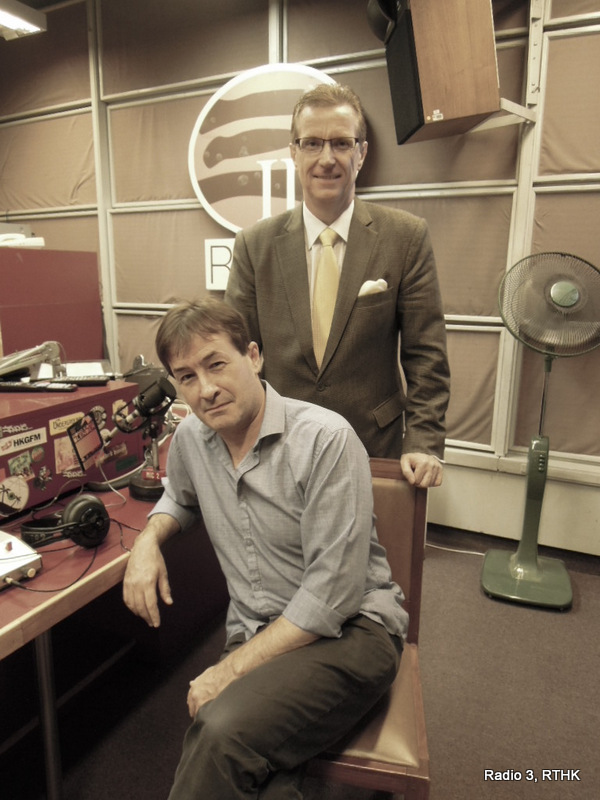
The Hong Kong Visa Geeza on RTHK Radio 3

Please select the social network you want to share this page with:
24

Jan 2015

Please select the social network you want to share this page with:

23

Jan 2015

2015 Immigration Policy Changes – the Inevitable Suspension of the Capital Investment Entrant Scheme

Posted by / in Investment Visas, Musing, VG Front Page / 1 response

PRACTICE UPDATE: October 2026

Summary of Legacy Position:

Written upon the abrupt suspension of the original CIES by Chief Executive CY Leung in January 2015, this post analyzes why the government shut down the original programme. The administration pivoted away from passive capital importation—which had been heavily criticized for fueling local asset inflation without bringing active commercial skills—toward active talent recruitment and the General Employment Policy (GEP) Investment as Entrepreneur framework.

Compare & Contrast with the New CIES:

Policy Inversion: The New CIES reverses the 2015 closure, but does so with substantial structural guardrails designed specifically to avoid repeating the flaws of the old scheme.

Threshold & Target: Where the legacy scheme closed at a HK$10 million capital threshold, the New CIES demands HK$30 million in net worth and deployment.

Exclusion of Residential Real Estate: While early iterations of the original CIES permitted residential property investment (which exacerbated housing pressures), the New CIES strictly excludes all residential real estate, permitting only commercial/industrial property (capped at HK$10 million).

Public Policy Alignment: The New CIES introduces the mandatory HK$3 million ring-fenced allocation to the Hong Kong Investment Corporation (HKIC), ensuring passive capital directly subsidizes local innovation, life sciences, and deep tech rather than resting entirely in private asset appreciation.

Long past its sell-by date and way beyond the ken of its originally intended constituency, CY Leung announced the suspension of the Capital Investment Entrant Scheme from the 15th of this month and at a swoop said ‘enough’ to the 20,000 moneyed mainlanders who lent the economy USD600 million over the course of the last 12 years.

This short Update offers commentary on the winners and losers.

More Stuff You May Find Useful or Interesting

2015 Hong Kong Immigration Enhancement Measures Applicable to the Employment Visa and Visas Issued Under the Admission Scheme for Mainland Talents & Professionals

Hong Kong Immigration Policy Changes 2015 – Security Bureau Report to Legco – Rationale for the New Measures

Hong Kong Immigration Policy Changes – Enhancement Measures to Make Things a Bit Easier

Capital Investment Entrant Scheme Suspended – Business Investment Visa Gets a Boost!

2015 Immigration Enhancement Measures Applicable to the Hong Kong Entrepreneur Visa (Business Investment Visa)

Please select the social network you want to share this page with:

22

Jan 2015

Please select the social network you want to share this page with:

21

Jan 2015

Quality Migrant Admission Scheme Enhancement Measures 2015 – What’s Up?

Posted by / in Musing, Special Programmes, VG Front Page / No responses

How the Content Must Now Be Read in Light of the Updated QMAS (Quality Migrant Admission Scheme) Policy

In the historical policy commentary published in Quality Migrant Admission Scheme Enhancement Measures 2015 – What’s Up?, the analysis reviews the significant liberalization package announced by then-Chief Executive C.Y. Leung in January 2015. According to the Hong Kong Visa Geeza, Stephen Barnes, these measures were designed to broaden talent intake and soften ongoing residence administration by introducing a relaxed extension pattern (transitioning from the rigid 1+2+2+3 schedule to an initial 2-year grant followed by 3+3 years) and offering a streamlined 6-year single extension for top-tier high earners earning HK$2M or more. In addition, the 2015 reforms injected bonus scoring points for graduates of world top-100 universities and candidates with international career experience. While these adjustments eased the early friction of managing status across the 7-year path to the Right of Abode, Barnes observed that the core selection machinery remained anchored to a discretionary points lottery managed by a non-official Advisory Committee, where non-elite applicants near the 80-point pass mark continued to face high rejection rates.

That 2015 policy benchmark must now be completely re-evaluated through the definitive legal architecture established in our PRACTICE UPDATE: The Quality Migrant Admission Scheme Definitively Stated 2026-27 by Stephen D Barnes, which documents the structural transformation executed in late 2024. As stated by the Hong Kong Visa Geeza, Stephen Barnes, the 2015 points framework and its bonus-point increments have been permanently dissolved in favor of 12 objective, binary assessment criteria under the General Points Test. Achieving eligibility is no longer a matter of aggregating points to hit a flexible target; candidates must pass at least 6 out of the 12 criteria (such as holding STEM postgraduate degrees, top-100 university credentials, high annual income exceeding HK$1M, or multinational enterprise tenure) simply to qualify for ministerial consideration. Furthermore, the extension framework has been updated again: the initial grant under the General Points Test is now a generous 36 months (3 years) followed by a 3+2 pattern, while the Achievement-based Points Test grants an immediate 8-year stay. However, the 2026–27 update delivers an essential strategic warning: the expanded 3-year initial runway is not an invitation for passive absence. Entrants must substantiate genuine economic settlement, taxable earnings, or graduate-level employment at the Year 3 renewal threshold to preserve their continuous ordinary residence under Cap. 115.

The Quality Migrant Admission Scheme Enhancement Measures announced by the Chief Executive of the HKSAR, CY Leung on January 15, 2015 ostensibly appear to be opening the door to a wider array of top notch talent and making it easier, in the process, to manage your continuing residence for the first 7 years in Hong Kong

This short Update offers commentary on these changes.

More Stuff You May Find Useful or Interesting

2015 Hong Kong Immigration Enhancement Measures Applicable to the Employment Visa and Visas Issued Under the Admission Scheme for Mainland Talents & Professionals

Hong Kong Immigration Policy Changes 2015 – Security Bureau Report to Legco – Rationale for the New Measures

Hong Kong Immigration Policy Changes – Enhancement Measures to Make Things a Bit Easier

Capital Investment Entrant Scheme Suspended – Business Investment Visa Gets a Boost!

2015 Immigration Enhancement Measures Applicable to the Hong Kong Entrepreneur Visa (Business Investment Visa)

Please select the social network you want to share this page with:

20

Jan 2015

2015 Immigration Enhancement Measures Applicable to the Hong Kong Entrepreneur Visa (Business Investment Visa)

Posted by / in Investment Visas, Musing, VG Front Page / 9 responses

The Hong Kong Entrepreneur Visa and the Startup visa comes into being (of sorts).

In his recent Policy Address, the Chief Executive of the HKSAR, CY Leung announced the 2015 Hong Kong Immigration Enhancement Measures to the business investment visa essentially splitting it into 2 streams – the Hong Kong Entrepreneur visa and also the Startup visa.

This short Update offers commentary on these changes.

PRACTICE UPDATE: How the content must now be read in light of current ImmD policy:

Historically, this flagship cornerstone guide laid out the comprehensive blueprint for securing an Investment as Entrepreneur visa under the General Employment Policy (GEP). The Geeza framed the route as the ultimate vehicle for commercial self-determination in Hong Kong, demystifying the statutory test of “substantial contribution to the economy of the HKSAR.” In that era, the entire regime was celebrated for its pragmatic flexibility: ImmD evaluated applications holistically, favoring commercial viability, relevant experience, and genuine intent over raw balance-sheet strength. Foreign founders and solo practitioners were routinely approved with modest seed capital of a few hundred thousand dollars, a flexible desk in a serviced office or co-working space to conserve runway, and a well-reasoned business plan promising to gradually create local jobs over a two- to three-year ramp-up period.

The game has changed from an accessible, narrative-driven assessment into an unforgiving, empirical institutional reset. ImmD has completely excised administrative discretion and qualitative storytelling from the independent entrepreneur stream. Under post-April 2026 administrative practice aligned with TTPS Category A operational substance (~HKD 2.5M enterprise scale), the statutory “substantial contribution” test is now enforced as a rigid compliance audit demanding non-negotiable corporate hardware audited on day one: HKD 1.5M–2.0M in deployed corporate bank liquidity sitting in a local bank account, an executed commercial lease for exclusive physical premises (“four walls”) disqualifying serviced and co-working desks entirely, and active Mandatory Provident Fund (MPF) payroll contributions for 2–3 local Hong Kong permanent residents.

Consequently, the traditional, bootstrapped “entrepreneur visa” described in historical guides is effectively dead for independent applicants. Hong Kong’s business immigration framework now strictly bifurcates founders: either you arrive with enterprise-scale corporate funding and immediate operational infrastructure, or you hold documented, formal admission into an officially accredited government incubator (such as Cyberport, HKSTP, or the Design Incubation Programme). Because incubator accreditation is the sole statutory mechanism that waives the mandatory HKD 1.5M–2.0M liquidity, dedicated commercial lease, and immediate MPF headcount mandates, any early-stage founder attempting to secure an entrepreneur visa independently on historical assumptions of lean bootstrapping faces swift and summary refusal.

More Stuff You May Find Useful or Interesting

2015 Hong Kong Immigration Enhancement Measures Applicable to the Employment Visa and Visas Issued Under the Admission Scheme for Mainland Talents & Professionals

Hong Kong Immigration Policy Changes 2015 – Security Bureau Report to Legco – Rationale for the New Measures

Hong Kong Immigration Policy Changes – Enhancement Measures to Make Things a Bit Easier

Capital Investment Entrant Scheme Suspended – Business Investment Visa Gets a Boost!

The Visa Geeza Interviews – A Call For Entrepreneurs to Get in Touch

Please select the social network you want to share this page with: