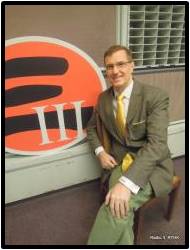
Business investment visa shake up! On February 10, 2015 I gave a talk at www.centreo.hk on my interpretation of the immigration policy changes announced by CY Leung earlier in January.
PRACTICE UPDATE: How the content must now be read in light of current ImmD policy:
Historically, this foundational policy commentary broke down the HKSAR Government’s official rollout of the “Business Investment Visa Enhancement Measures”—the administrative initiative designed to stimulate international entrepreneurship and foster an innovation-driven economy. The Geeza analyzed the government’s stated criteria, demystifying how these measures formally recognized early-stage founders backed by government-supported incubation and acceleration programs. In that era, the enhancement measures were characterized as an optional, fast-track perk rather than a rigid gateway. ImmD maintained broad administrative discretion across the board: prospective entrepreneurs were encouraged to view government incubation as a bonus, but by no means a necessity. An independent founder could readily bypass the institutional incubation apparatus altogether, securing standard approval under the General Employment Policy (GEP) with modest seed capital of a few hundred thousand dollars, a flexible serviced office or co-working space, and a forward-looking commitment to phase in local hiring over two to three years.
The game has changed from an optional incentive scheme into the only surviving statutory gateway for early-stage and seed-stage ventures. What the government originally introduced as “enhancement measures” has, under post-April 2026 administrative practice, become an absolute institutional divide. ImmD has stripped all narrative leniency from the mainstream entrepreneur route, aligning independent business assessments with the severe corporate standards of TTPS Category A operational substance (~HKD 2.5M enterprise scale). For any venture standing outside the accredited enhancement framework, ImmD enforces an unbending empirical audit audited on day one: HKD 1.5M–2.0M in deployed corporate bank liquidity sitting in a local bank account, an executed commercial lease for exclusive physical premises (“four walls”) disqualifying serviced and co-working desks entirely, and active Mandatory Provident Fund (MPF) payroll contributions for 2–3 local Hong Kong permanent residents.
Consequently, the enhancement measures are no longer an administrative convenience—they are the sole statutory safe harbor protecting lean startups from instant rejection. Formal admission into an officially accredited government incubator (such as Cyberport, HKSTP, the Design Incubation Programme, or recognized ITC programs) now serves as the only lawful proxy for “substantial contribution,” formally waiving the mandatory capital deployment, dedicated commercial lease, and immediate MPF headcount thresholds. For any foreign entrepreneur without enterprise-grade balance sheets, attempting to establish a business outside these specific enhancement measures will result in swift and summary refusal.
How the Content Must Now Be Read in Light of the Updated QMAS (Quality Migrant Admission Scheme) Policy
In the strategic policy analysis published in 2015 Hong Kong Immigration Policy Update – Extra QMAS Points for the Brightest of the Bright, the discussion examines the landmark introduction of tier-one academic and international experience bonuses under the legacy scoring architecture. According to the Hong Kong Visa Geeza, Stephen Barnes, the 2015 enhancement measures marked the first time the Immigration Department formally shifted from an egalitarian qualification test into an elite-focused talent filter by awarding an immediate 30-point scoring bonus for degrees conferred by top-100 world universities (QS, THE, ARWU, US News) and an extra 15 points for candidates with at least two years of overseas professional tenure. While raising the maximum score ceiling under the General Points Test, the reform was widely marketed as an open door for global talent; however, Barnes cautioned that these adjustments did not eliminate the scheme’s fundamental ‘black box’ vetting mechanism. Rather, they created a bifurcated applicant pool where non-elite candidates struggling near the 80-point pass mark were effectively sidelined by the Advisory Committee in favor of applicants wielding elite institutional credentials.
That historical policy milestone must now be re-evaluated through the definitive legal benchmarks established in our PRACTICE UPDATE: The Quality Migrant Admission Scheme Definitively Stated 2026-27 by Stephen D Barnes, which documents the total eradication of the legacy numerical points calculation following the sweeping late 2024 overhaul. As stated by the Hong Kong Visa Geeza, Stephen Barnes, what began in 2015 as discretionary “extra bonus points” has now become institutionalized as mandatory binary hurdles under the new 12-criterion framework. Under Criterion 4 (degree from a global top-100 institution) and Criterion 10 (at least 2 years of graduate overseas work experience), elite academic and international pedigree are no longer merely ways to accumulate points to cross an 80-point threshold; they represent essential pillars required to achieve the strict 6-out-of-12 criteria pass mark for consideration by the Ministerial Assessment Panel. Furthermore, the 2026–27 update underscores that securing initial entry on the strength of world-class credentials is only the baseline, as entrants face the modern 3+3+2 extension gauntlet requiring verified local specialist employment and taxable economic settlement to remain in Hong Kong.
Extra QMAS points up for grabs to the Brightest of the Bright!
On February 10, 2015 I gave a talk at www.centreo.hk on my interpretation of the immigration policy changes announced by CY Leung earlier in January.
In this segment I discuss the new decision of the Hong Kong Immigration Department to grant extra QMAS points to the best of the best graduates who apply for this visa.
On February 10, 2015 I gave a talk at www.centreo.hk on my interpretation of the immigration policy changes announced by CY Leung earlier in January.
In this segment I discuss what we know about the new visa programme designed for foreign born, second generation offspring of Hong Kong Chinese permanent residents.